
Rwanda vs Uganda: Should You Trek Gorillas in Rwanda or Uganda?
Written by
Ker & Downey® Africa
Choosing between gorilla trekking in Rwanda and gorilla trekking in Uganda is less about where you are more likely to see gorillas and more about the journey surrounding the encounter. Both offer carefully managed treks to habituated mountain gorilla families, but their access, terrain, pace and wider safari possibilities differ.
Rwanda is ideal for travelers seeking streamlined logistics, refined lodges and a shorter journey centered on Volcanoes National Park. Uganda better suits those wanting a more adventurous forest experience, a wider choice of trekking sectors and the opportunity to combine gorillas with chimpanzees, traditional game viewing and several contrasting national parks.
Our specialists often recommend Rwanda when time, comfort and ease of access are the priorities. Uganda is usually the stronger choice when travelers want a longer, more varied and physically immersive safari. The comparison below explains which experience best suits your fitness, available time, budget and wider East African plans.
Rwanda vs Uganda Gorilla Trekking at a Glance
Comparison | Rwanda | Uganda |
Main trekking area | Volcanoes National Park | Bwindi Impenetrable National Park and Mgahinga Gorilla National Park |
Best for | Shorter luxury journeys, first-time trekkers and streamlined logistics | Adventurous travelers, longer safaris and broader primate experiences |
Access | Approximately 2.5–3 hours by road from Kigali | Longer road journeys or domestic flights to southwestern Uganda |
Trekking environment | Volcanic slopes, bamboo forest and high-altitude terrain | Dense rainforest in Bwindi; volcanic slopes and bamboo in Mgahinga |
Typical trekking character | More structured and logistically straightforward | More variable, exploratory and physically immersive |
Permit positioning | Higher-cost, low-volume model | Lower permit cost and more trekking sectors |
Luxury style | High-end lodges, exclusive-use villas and polished service | Remote forest lodges, intimate camps and adventurous luxury |
Additional primates | Golden monkeys in Volcanoes and chimpanzees in Nyungwe | Chimpanzees in Kibale and Kyambura, plus golden monkeys in Mgahinga |
Wider safari | Akagera, Nyungwe, Lake Kivu and Kigali | Queen Elizabeth, Kibale, Murchison Falls, Kidepo and the Nile |
Typical journey length | Four to seven nights | Eight to twelve nights |
Families | More straightforward, but trekking participants must meet the minimum age | Better for older teenagers comfortable with longer transfers and forest trekking |
Honeymoons | Strongest for refined lodges and a compact luxury itinerary | Strongest for adventurous couples wanting primates and traditional safari |
Best-known trekking periods | January–February and June–September | June–September, although trekking operates throughout the year |
Easy to combine with | Tanzania, Kenya or a wider Rwanda itinerary | Kenya, Rwanda or a longer Uganda safari |
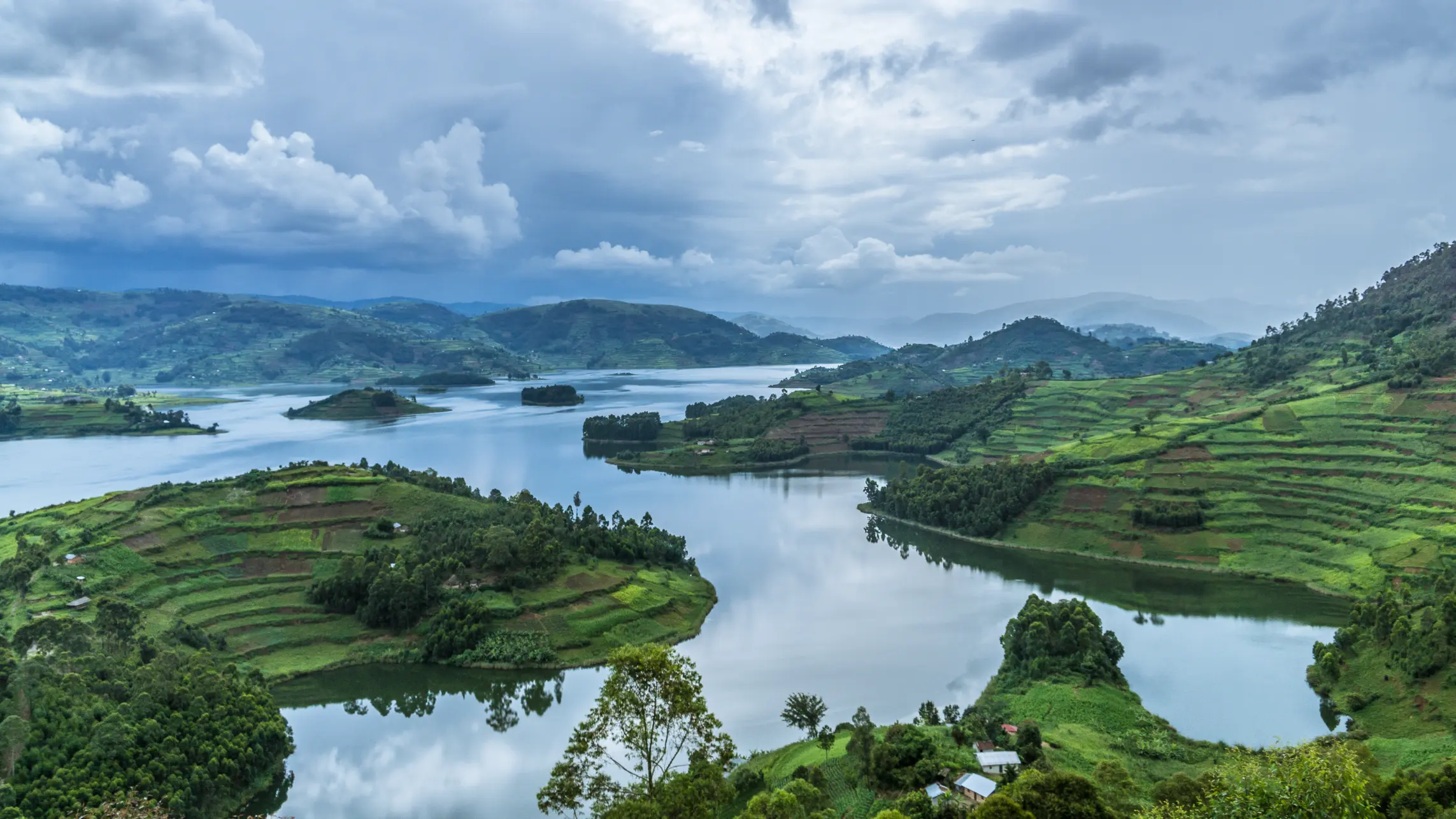
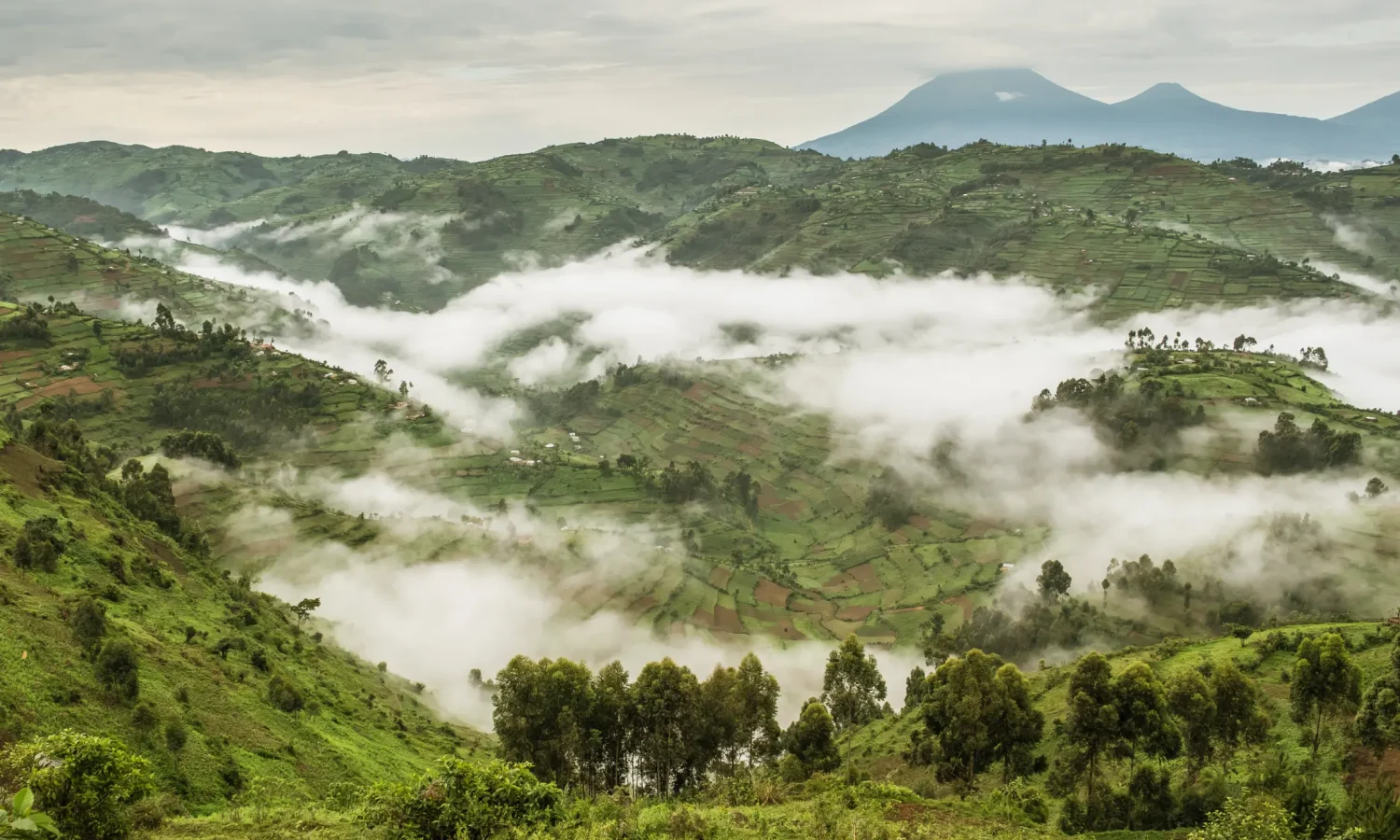
Volcanoes National Park is the most accessible of the principal gorilla trekking areas, while Bwindi offers multiple trekking sectors and a denser, more unpredictable rainforest experience. Mgahinga provides a quieter Ugandan alternative within the Virunga Massif.
Key Differences Between Gorilla Trekking in Rwanda and Uganda
Overall Trekking Style
Rwanda provides the more streamlined gorilla trekking experience.
Travelers usually arrive in Kigali, spend time exploring the city and continue by road to the Volcanoes region. Once there, the lodge, park headquarters and trekking trailheads can be connected within a relatively compact itinerary.
The experience feels carefully structured. Guests receive a morning briefing, are allocated to a gorilla family and then travel to the relevant starting point with guides and trackers.
The trek itself can still be demanding. Volcanoes National Park includes altitude, steep slopes, mud and rapidly changing weather. The distinction is not that Rwanda is easy, but that the logistics around the physical experience are generally more straightforward.
Uganda feels more expeditionary.
Bwindi is divided into several trekking sectors, each with its own terrain, trailheads and lodge locations. The dense vegetation, steep valleys and variable forest paths can make the journey feel less predictable.
The process of reaching southwestern Uganda also requires more planning, particularly when traveling overland. For many guests, this adds to the sense that the gorilla encounter has been earned through a wider journey.
Choose Rwanda when you want the trek to fit smoothly within a shorter luxury itinerary. Choose Uganda when the forest journey and its unpredictability are part of the appeal.
Accessibility
Rwanda has the clear advantage for travelers with limited time.
Volcanoes National Park can typically be reached from Kigali in approximately two and a half to three hours by road. This makes it possible to create a focused four- or five-night itinerary without adding domestic flights or lengthy overland travel.
Ker & Downey® Africa’s Mountain Gorilla Trekking in Rwanda journey demonstrates this compact structure, combining Kigali, Volcanoes National Park, gorillas, golden monkeys and cultural experiences within five days.
Uganda’s gorilla regions are more remote from the principal international gateway at Entebbe.
Travelers may reach Bwindi or Mgahinga through a longer road journey, a domestic flight followed by a transfer or as part of a wider safari through western Uganda.
The correct route depends on the trekking sector and lodge. A permit for one part of Bwindi should not be paired with accommodation on the opposite side of the forest without considering the transfer implications.
Choose Rwanda when minimizing travel time is important. Choose Uganda when you have enough time to make the journey through the country part of the overall experience.
Trekking Terrain and Physical Difficulty
No gorilla trek can be guaranteed to be short or easy.
The gorillas move through wild forest, and the duration depends on their location, weather, terrain and the family assigned that morning.
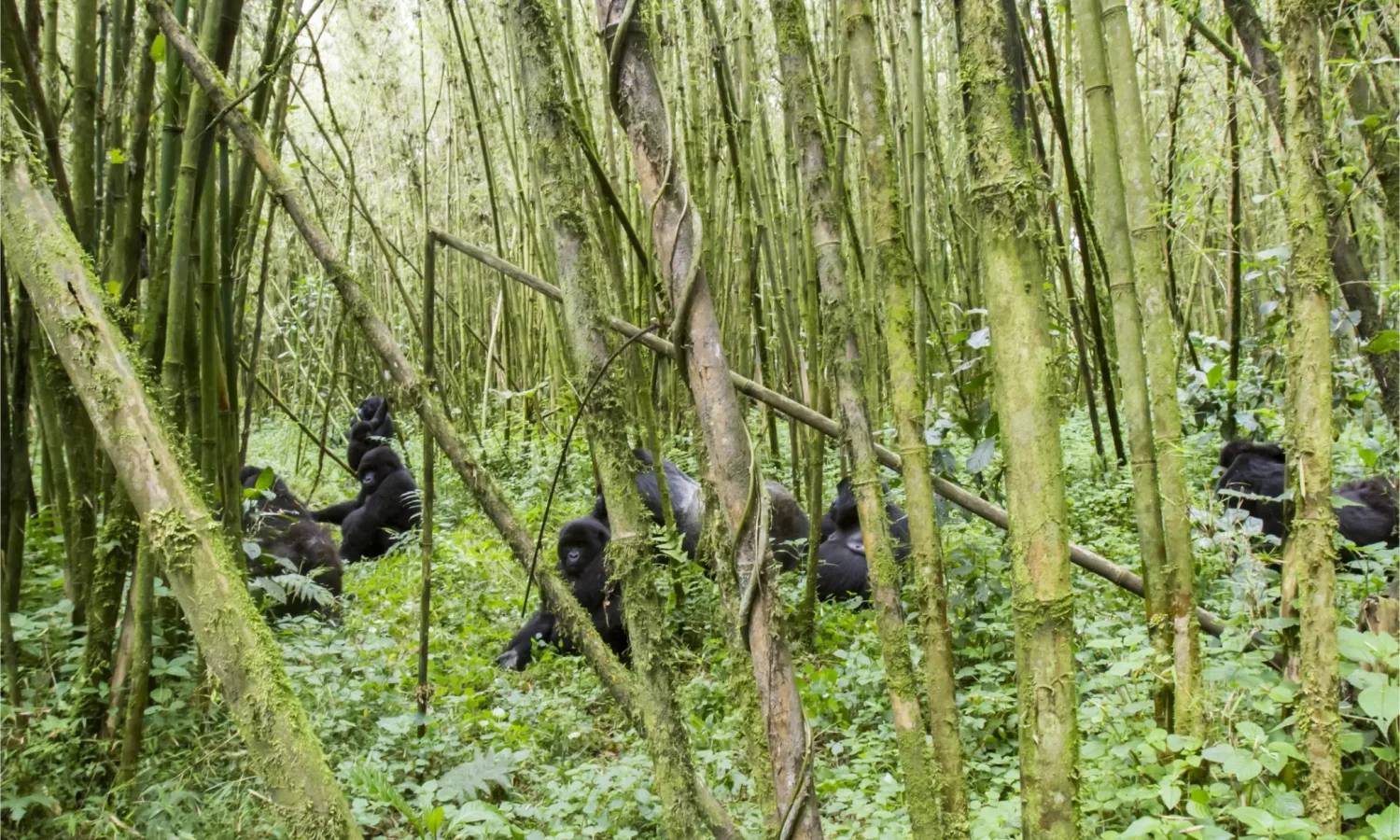
Volcanoes National Park combines high altitude with volcanic slopes, bamboo forest and montane vegetation. Trails can be steep and muddy, but the overall experience is often regarded as more structured, with clearer access in certain areas.
Bwindi is frequently considered the more physically demanding environment because of its dense vegetation, uneven ground, steep inclines and humid rainforest conditions.
The forest can feel enclosed, with trackers occasionally creating a path through the undergrowth.
Mgahinga combines altitude and volcanic terrain. Its more open bamboo landscape may provide clearer sightlines than sections of Bwindi, although the slopes remain demanding.
A traveler’s fitness should influence the planning, but it should not be treated as the only factor. Porter support is available, and specialist arrangements may help guests who require additional assistance.
Permit Cost and Availability
Rwanda follows a high-value, low-volume tourism model.
At the time of writing, Rwanda’s official tourism authority lists gorilla permits at US$1,500 per person per trek. The minimum trekking age is 15. Uganda’s standard permits, according to the Conservation Tariff July 2024 – June 2026 – are priced at US$800 for Bwindi and Mgahinga. Uganda also offers a specialist gorilla habituation experience in one section of Bwindi, providing additional time with a family undergoing habituation. Permit rates and conditions can change, so all costs should be reconfirmed before confirming the itinerary.
The price difference can be significant for couples, families or travelers planning two treks.
However, the permit should not be assessed in isolation. Rwanda’s shorter transfers may reduce other logistical costs, while a Uganda itinerary may require domestic flights or additional nights.
Choose Rwanda when a seamless short journey is more important than minimizing the permit cost. Choose Uganda when permit value and a longer, broader safari are priorities.
Luxury and Accommodation Style
Rwanda offers some of Africa’s most sophisticated gorilla trekking accommodation.
Properties near Volcanoes National Park include private villas, contemporary lodges, wellness facilities, personalized dining and conservation-focused experiences. The standard of accommodation can make the trekking region feel like a complete luxury destination rather than simply a base for one activity.
Uganda’s forest lodges tend to feel more remote and closely connected to the landscape.
Luxury is expressed through location, views, guiding and the experience of staying beside an ancient rainforest. Accommodation may be less architecturally elaborate than
Rwanda’s most exclusive properties, but it often provides a stronger sense of adventurous isolation.
Choose Rwanda when the lodge, spa, dining and private-villa experience should carry equal importance to the trek.
Choose Uganda when comfort matters but the forest setting and wider journey should remain the central focus.
The Gorilla Trekking Experience in Rwanda
Volcanoes National Park
Volcanoes National Park lies within Rwanda’s portion of the Virunga Massif.
The landscape is defined by volcanic peaks, high-altitude forest and extensive bamboo zones. The region is closely associated with gorilla conservation and the scientific legacy of Dian Fossey.
The park is Rwanda’s only mountain gorilla trekking destination, giving the experience a clear geographical focus.
The relative ease of access allows travelers to spend several nights in one lodge, complete one or two gorilla treks and add golden monkey tracking, conservation visits or hikes without repeatedly relocating.
Rwanda carefully limits the number of visitors allocated to each habituated gorilla group. The official minimum age is 15, and the standard viewing period is tightly managed to reduce disturbance and disease risk.
Travelers considering Rwanda can begin with our gorilla trekking guide or the detailed comparison of Volcanoes, Bwindi and Mgahinga.
What the Trek Feels Like
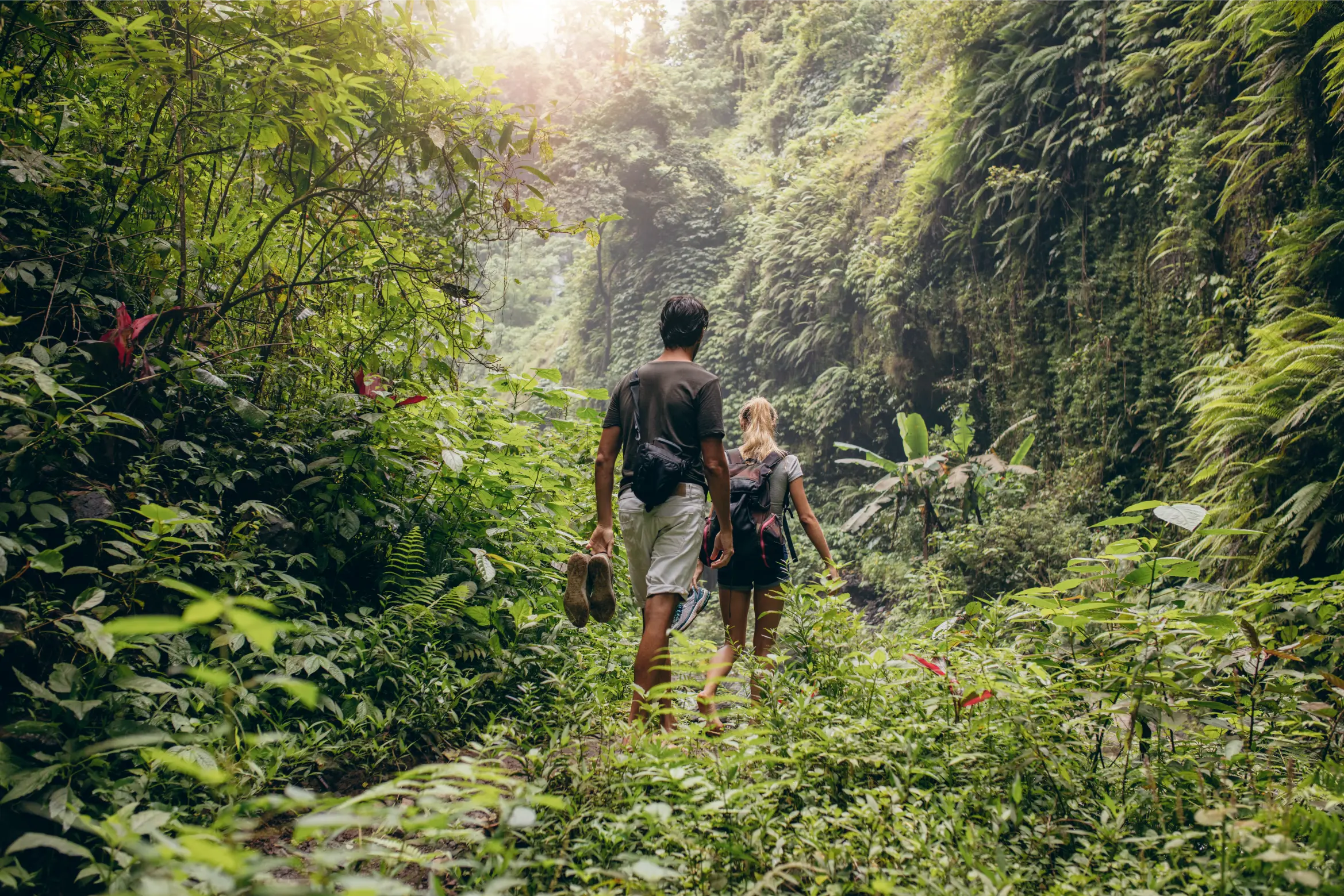
The day begins early with a briefing at the park headquarters.
Travelers are assigned to a gorilla family before continuing to a trailhead. Assignments may consider the group’s fitness, although the location and movement of wild gorillas remain unpredictable.
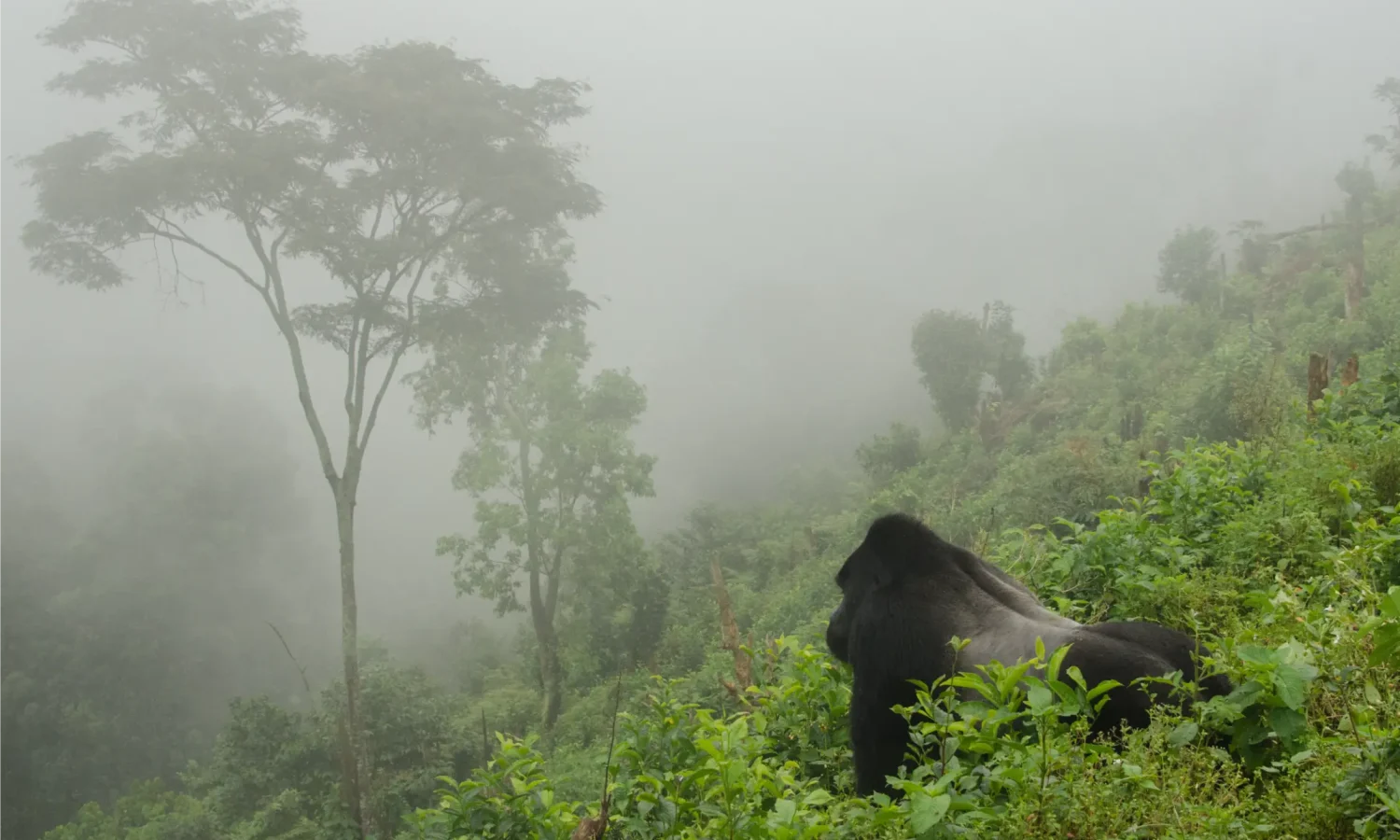
The route may cross farmland before entering bamboo or montane forest. Conditions can move quickly from cool and clear to wet, muddy and misty.
Once trackers locate the family, visitors spend a controlled period observing the gorillas.
The most meaningful moments are often quiet: an adult feeding, juveniles playing, a mother holding an infant or a silverback remaining watchful while the family rests.
Every habituated gorilla family has its own dynamics and personalities. Some groups are playful and active, while others are calmer and more reserved, meaning no two gorilla treks ever feel exactly the same.
The trek should not be approached as a staged wildlife sighting. Guides control distance and behavior, but the gorillas decide where they move, feed and settle.
Golden Monkey Tracking
Golden monkey tracking is a valuable addition to a Rwanda gorilla itinerary.
The experience also takes place within Volcanoes National Park but has a noticeably different rhythm. Golden monkeys move quickly through bamboo forest, creating a more active and often playful photographic challenge.
The trek is generally treated as a complementary primate experience rather than a substitute for gorilla trekking.
It works particularly well on the day before or after the gorilla trek, allowing travelers to spend more time understanding the park’s ecology without repeating the same encounter.
Our Mountain Gorilla Trekking in Rwanda includes both gorilla and golden monkey tracking within one concise journey, expertly planned to meet your precise needs.
The Gorilla Trekking Experience in Uganda
Bwindi Impenetrable National Park
Bwindi provides Uganda’s most extensive range of gorilla trekking experiences.
The ancient rainforest is divided into several sectors, including Buhoma, Ruhija, Rushaga and Nkuringo. Each sector has different lodges, trailheads, road access and terrain.
This means that selecting “Bwindi” is not enough. The permit, trekking sector and accommodation must be planned together.
Bwindi’s appeal lies in the depth of the forest experience.
The vegetation is dense and layered, trails can be steep, and the length of the trek is difficult to predict. Reaching a gorilla family may require a comparatively short walk or several hours of sustained effort.
The sense of progression is one of the principal reasons experienced travelers choose Uganda. The gorillas are encountered within a forest that feels complex, humid and biologically rich rather than within a landscape designed around visitor convenience.
Our bespoke Uganda Done Right safari pairs Bwindi gorilla trekking with chimpanzees and traditional safari experiences elsewhere in the country.
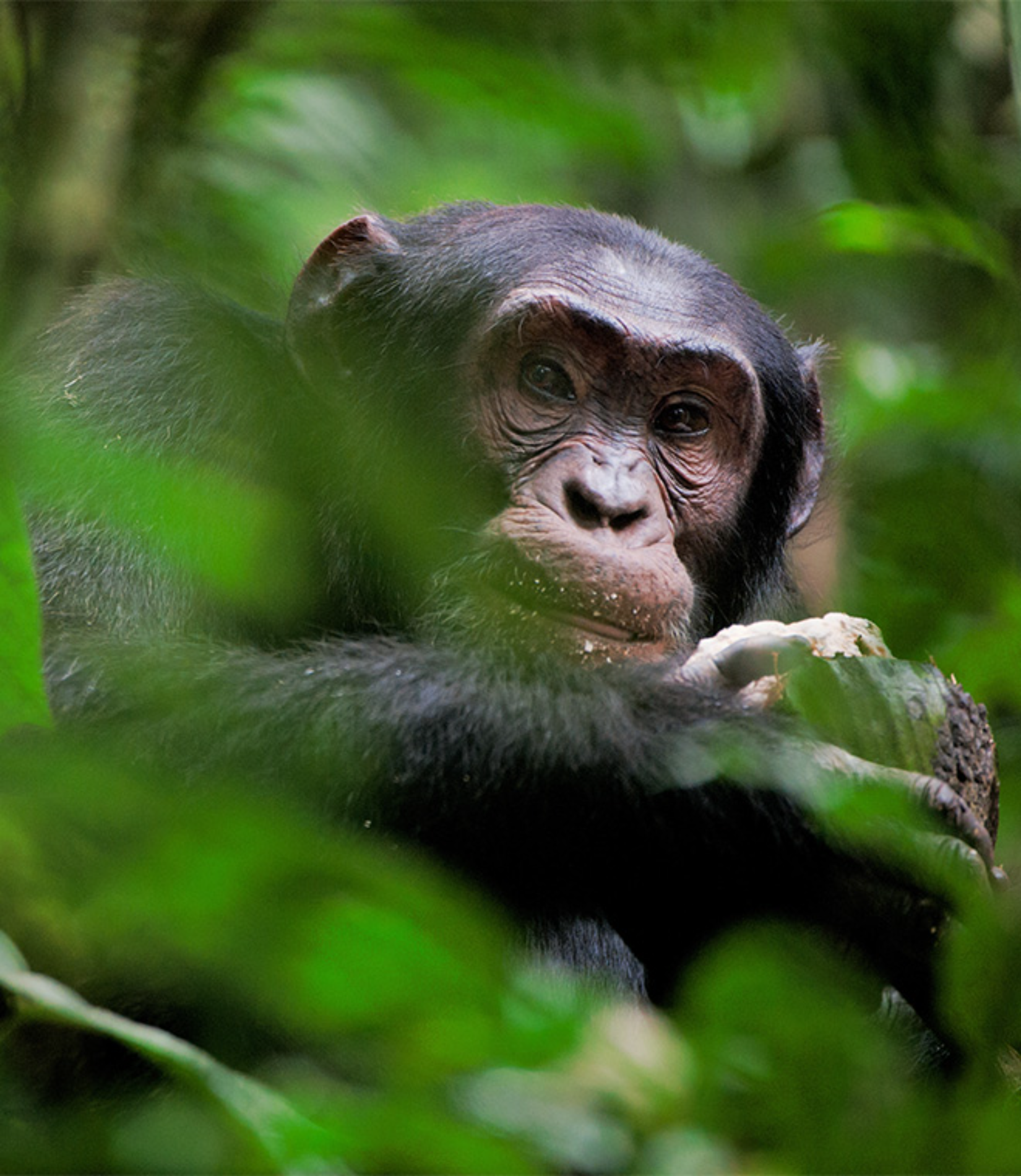
Mgahinga Gorilla National Park
Mgahinga is smaller and considerably less visited than Bwindi.
It forms part of the wider Virunga landscape and is characterized by volcanic peaks, bamboo forest and high-altitude terrain. The more open vegetation can create a different atmosphere and, at times, clearer photographic sightlines.
Mgahinga has a much smaller daily permit capacity than Bwindi, making availability limited.
Its quieter character appeals to travelers who want an understated alternative and are comfortable building the itinerary around a specific trekking opportunity.
Golden monkey tracking can also be incorporated, creating a primate-focused stay within the same park.
Choose Mgahinga when lower visitor numbers and the volcanic landscape matter more than having the broadest selection of trekking dates and sectors.
Gorilla Habituation Experience
Uganda offers a specialized gorilla habituation experience in a designated section of Bwindi.
Unlike a standard trek to a fully habituated family, this experience involves spending time with researchers, trackers and a gorilla group still becoming accustomed to carefully managed human presence.
It requires more time, patience and physical endurance.
The experience is not simply an extended version of a conventional viewing. The gorillas may remain less settled around visitors, and the day is shaped by research and tracking processes rather than by a predictable photographic encounter.
It is best suited to experienced wildlife travelers, photographers and those with a strong interest in conservation science.
Standard trekking is usually the better first experience.
Habituation is appropriate when the traveler understands that additional time does not guarantee clearer or more active gorilla behavior.
Wildlife Beyond the Gorillas
Rwanda — A Compact Multi-Ecosystem Journey
Rwanda makes it possible to combine gorilla trekking with several distinct environments without covering the same distances required in larger countries.
A wider Rwanda itinerary may include:
- Akagera National Park for a traditional savannah safari
- Nyungwe Forest for chimpanzees and other primates
- Lake Kivu for a slower lakeside interlude
- Kigali for history, art, food and cultural context
- Volcanoes National Park for gorillas and golden monkeys
Akagera has restored lions and rhinos, allowing travelers to add a Big Five-style game-viewing component to a Rwanda journey.
Nyungwe introduces a different rainforest environment and broadens the primate experience beyond mountain gorillas.
Rwanda therefore suits travelers who want gorillas to remain the highlight but not the only wildlife element.
Our Luxury Gorilla Trekking Safari in Rwanda combines Kigali, Volcanoes and Nyungwe within a bespoke seven-day itinerary, expertly planned by our luxury travel specialists.
Uganda — Primates, Big Game and the Nile
Uganda offers the broader safari experience.
A longer itinerary can combine Bwindi with chimpanzees, savannah wildlife, river journeys, crater landscapes and waterfalls.
Important additions include:
- Kibale Forest for chimpanzee tracking
- Kyambura Gorge for a forest experience within
- Queen Elizabeth National Park
- Queen Elizabeth National Park for game drives and varied landscapes
- Murchison Falls and the Nile
- Kidepo Valley for a remote savannah safari
- Lake Victoria and Jinja
- Mgahinga for gorillas and golden monkeys
Uganda’s strength is the ability to follow one wildlife experience with another without every destination feeling similar.
Our Rivers and Rainforests Ugandan Safari combines Bwindi with the Nile and other contrasting experiences, while our custom Gorillas & Big Five Safari Adventure connects Uganda’s primates with Kenya’s traditional safari regions.
Choose Uganda when gorilla trekking should form one chapter within a longer and more adventurous wildlife journey.
Luxury Gorilla Lodges in Rwanda and Uganda
Luxury Lodges in Rwanda
Rwanda’s Volcanoes region offers an exceptional concentration of high-end accommodation.
The best properties combine proximity to the park with private villas, mountain views, fireplaces, wellness facilities, conservation experiences and highly personalized service.
Notable options include:
Singita Kataza House is particularly suitable for families or private groups seeking an exclusive-use villa with dedicated staff. Sabyinyo Silverback Lodge is positioned close to the park headquarters and combines individual cottages with a community-owned model.
Choose Rwanda when the post-trek lodge experience, private dining, wellness and architectural design are major priorities.
Luxury Forest Lodges in Uganda
Uganda’s accommodation feels more closely embedded in the forest journey.
Properties are generally smaller, and their value lies in location, views, atmosphere and access to a particular Bwindi sector.
Notable options include:
Clouds Mountain Gorilla Lodge offers stone cottages and ridge-top forest views near Uganda’s gorilla territory. Kyambura Gorge Lodge adds a contrasting primate and savannah base near Queen Elizabeth National Park.
In Uganda, lodge selection must be driven by the permit sector. An attractive property is not the right choice when it requires an impractical transfer to the assigned trailhead.
Choose Uganda when remoteness and direct connection to the forest matter more than extensive resort-style facilities.
Best Time for Gorilla Trekking in Rwanda and Uganda
Gorilla trekking operates throughout the year in both countries.
However, rainfall influences trail conditions, photography and the physical effort required.
Period | Rwanda | Uganda |
January–February | Often drier and popular for trekking | Generally favorable, although rain remains possible |
March–May | Wetter conditions and muddier forest trails | Longer rains can create more demanding terrain |
June–September | Popular drier trekking period | Popular period for Bwindi and Mgahinga |
October–November | Wetter conditions and changing trail conditions | Shorter rains may increase mud and humidity |
December | Mixed conditions with trekking available | Mixed conditions with trekking available |
Drier Trekking Periods
January, February and June through September are commonly selected for Rwanda.
Uganda is popular from June through September, when trail conditions may be comparatively less wet.
“Dry season” should not be interpreted as a guarantee of dry forest. Both destinations have high-altitude tropical environments where rain can occur at any time.
The benefit is generally a reduced probability of sustained heavy rain rather than consistently dry ground.
Wetter and Quieter Periods
The wetter months can bring muddier trails and more physically demanding conditions.
However, they may also offer:
- Rich green landscapes
- Lower demand at selected lodges
- Greater flexibility in accommodation choice
- Dramatic mist and forest photography
- Fewer travelers in the wider region
Travelers choosing these months should be realistic about equipment and fitness.
Waterproof clothing, gaiters, gloves and reliable hiking boots become particularly important. Porter support can also make a meaningful difference on slippery ground.
The gorillas remain present throughout the year. The principal seasonal change is the traveler’s experience of reaching them.
Planning Your Rwanda or Uganda Gorilla Trek
Ideal Trip Length
Rwanda can be experienced within a shorter itinerary.
A focused journey may include:
- One or two nights in Kigali
- Three nights near Volcanoes National Park
- One gorilla trek
- Golden monkey tracking or a conservation visit
Four or five nights can therefore work when gorilla trekking is the primary objective.
Seven to ten nights allows travelers to add Nyungwe, Akagera or Lake Kivu.
Uganda generally deserves more time.
A focused fly-in Bwindi journey may be relatively concise, but the country is most rewarding when gorillas are combined with chimpanzees and traditional safari regions.
Allow approximately:
- Four to six nights for a focused Uganda gorilla journey
- Eight to twelve nights for gorillas, chimpanzees and a savannah safari
- Twelve to sixteen nights for a fuller Uganda circuit
- Ten to fourteen nights for a combined Rwanda and Uganda primate itinerary
Our bespoke Uganda Done Right itinerary spans 10-nights, allowing you to enjoy Bwindi, Kyambura and other contrasting regions.
What to Pack
The exact equipment depends on the season, but every trekker should prepare for mud, vegetation, altitude and changing weather.
Useful items include:
- Broken-in waterproof hiking boots
- Long hiking trousers
- Long sleeves
- Waterproof outer layer
- Gardening-style gloves for vegetation
- Gaiters
- Small daypack
- Water
- Camera without flash
- Sun protection
- Insect repellent
Clothing should protect against nettles, branches and insects rather than being selected only for temperature.
A walking pole is often provided or arranged locally. Porters can carry bags and assist over difficult ground.
Flash photography is prohibited, and trekkers must follow ranger instructions intended to protect both visitors and gorillas. Uganda’s official guidelines also require travelers who are unwell with a potentially infectious illness not to participate.
Fitness and Porter Support
Travelers do not need to be elite hikers, but they should be prepared to walk uphill on uneven, muddy ground for an unpredictable period.
Preparation should include regular walking, hills or stairs and time spent wearing the boots intended for the trek.
Many first-time trekkers are surprised by how much using a porter enhances the experience, not only by providing practical support on difficult terrain, but also by directly benefiting local communities through sustainable tourism.
A porter can carry equipment, provide balance and help guests manage slippery or steep sections. Porter employment also creates a direct economic connection between tourism and nearby communities.
Travelers with mobility concerns should discuss them openly during planning. Support options may be available, but no arrangement can remove every challenge of a wild mountain environment.
Health and Age Requirements
Both Rwanda and Uganda apply a minimum age of 15 for gorilla tracking.
The age requirement exists partly because visitors must follow instructions consistently and maintain appropriate behavior around the gorillas.
Travelers displaying symptoms of infectious illness may be prevented from trekking because gorillas can be vulnerable to human diseases.
General medical advice, vaccinations and malaria-related planning should be discussed with an appropriate travel-health professional.
The trekking altitude, humidity and physical effort should also be considered by travelers with relevant health conditions.
Rwanda vs Uganda for Families
Neither destination is suitable for young children who are expected to participate in the gorilla trek because the minimum trekking age is 15 in both countries.
Rwanda is often easier for families traveling with teenagers.
Its shorter transfers, concentrated itinerary and private accommodation options reduce the logistical burden. An exclusive-use property such as Singita Kataza House also allows meals and daily schedules to be adapted around the family.
Uganda works particularly well for active families with older teenagers who are comfortable with longer travel days and more demanding terrain.
The wider itinerary can include chimpanzees, game drives and river activities, creating greater variety after the gorilla trek.
When younger children are traveling alongside eligible trekkers, appropriate private childcare and alternative activities must be arranged in advance. One parent should not assume they can decide on the morning of the trek to leave a child at the lodge without prior planning.
Choose Rwanda for the simpler family structure. Choose Uganda for active families wanting a longer wildlife journey.
Explore more bespoke luxury family safaris in Africa.
Rwanda vs Uganda for a Honeymoon
Rwanda offers the more polished and concise gorilla trekking honeymoon.
Couples can combine Kigali with a private lodge or villa near Volcanoes National Park, complete one or two treks and continue to Tanzania, Kenya or an Indian Ocean island.
The lodge experience may include private dining, fireplaces, wellness treatments, conservation visits and volcano views.
Uganda creates the more adventurous honeymoon.
A journey can combine Bwindi’s rainforest with chimpanzee tracking, Queen Elizabeth National Park, the Nile or Kenya’s traditional safari regions.
The romance comes less from resort-style seclusion and more from experiencing a varied expedition together.
Choose Rwanda when refined accommodation, minimal logistical friction and a shorter itinerary matter most.
Choose Uganda when the honeymoon should feel like a longer wildlife adventure through several environments.
Couples can also explore our luxury safari honeymoon experiences.
Rwanda vs Uganda for Photography
Rwanda can offer clearer photographic conditions in sections of bamboo and more open vegetation.
The structured logistics and shorter overall journey also make it easier to carry specialist equipment without navigating as many flights or road transfers.
However, Volcanoes National Park’s light can still be low, misty and changeable.
Uganda’s Bwindi provides more atmospheric forest photography.
Dense vegetation, filtered light and layered greenery can create powerful environmental images, although the same conditions make focusing and composition more difficult.
Mgahinga may provide more open sightlines than Bwindi while retaining a volcanic forest setting.
In both countries:
- Flash is prohibited.
- The forest may be dark.
- Gorillas may remain partly hidden.
- Movement can be sudden.
- Visitors must prioritize ranger instructions over the photograph.
- A weather-resistant camera setup is valuable.
Choose Rwanda when clearer logistics and potentially more open settings matter most.
Choose Uganda when the gorillas’ relationship with a dense rainforest environment is central to the visual story.
Can You Combine Rwanda and Uganda?
Yes. The two countries can work well together, particularly for travelers interested in primates.
A combined journey might include:
- Kigali
- Volcanoes National Park
- Bwindi or Mgahinga
Queen Elizabeth National Park - Kibale or Kyambura
- Lake Kivu or the Virunga region
The strongest combined itinerary does not necessarily include a gorilla trek in both countries.
Repeating the trek can be meaningful for photographers or dedicated primate enthusiasts, but many travelers gain more variety by trekking gorillas once and adding golden monkeys or chimpanzees elsewhere.
A two-country route should also account for border formalities, permit dates and the exact Bwindi or Mgahinga sector.
When planned correctly, Rwanda adds accessibility and polished accommodation, while Uganda contributes deeper forest immersion and a broader wildlife circuit.
For travelers wanting to combine gorillas with East Africa’s famous savannah regions, the Ultimate East Africa Safari links Rwanda’s gorillas with Tanzania. The Gorillas & Big Five Safari Adventure connects Uganda’s primates with Kenya.
Which Gorilla Trekking Destination Is Right for You?
Choose Rwanda If:
Choose Rwanda when:
- You have limited time.
- Straightforward access is important.
- This is your first gorilla trek.
- You prefer a polished and structured journey.
- High-end lodges or a private villa are priorities.
- You want to combine gorillas with Kigali.
- Golden monkey tracking interests you.
- You prefer fewer camp changes.
- You are continuing to Tanzania or Kenya.
- The higher permit price is acceptable within the overall itinerary.
Rwanda provides the more accessible and refined gorilla trekking journey.
Choose Uganda If:
Choose Uganda when:
- You want a more adventurous forest experience.
- You have at least one full week.
- Permit value is an important consideration.
- You are comfortable with longer transfers.
- You want a wider choice of trekking sectors.
- Chimpanzee tracking is a priority.
- You want to combine gorillas with traditional safari.
- Dense rainforest and challenging terrain appeal to you.
- The gorilla habituation experience interests you.
- You prefer remote forest lodges to polished resort-style luxury.
Uganda provides a deeper and more varied wildlife journey.
Choose Both If:
Choose both when you have approximately ten to fourteen days and primates are the central focus.
Rwanda offers accessibility, Volcanoes National Park and golden monkeys.
Uganda adds Bwindi or Mgahinga, chimpanzees and a wider selection of savannah and river experiences.
The itinerary should remain selective. Trekking in both countries can be powerful, but it should not come at the expense of adequate recovery time or opportunities to understand the wider landscapes.
The Ker & Downey® Africa Perspective
A common misconception is that the gorilla encounter itself is fundamentally better in one country.
The time spent with a habituated gorilla family is carefully managed in both Rwanda and Uganda. The emotional impact of sitting quietly near these animals is not determined by the national border. What changes is everything around the encounter.
Rwanda offers a more seamless route from international arrival to the forest. The lodges are exceptionally refined, the travel time is manageable and the journey can be completed within a relatively concise itinerary.
In Uganda, the routes are longer. Bwindi can be physically demanding and the forest often feels less predictable. In return, the gorilla trek can become part of a much broader journey through primate habitats, savannahs, rivers and remote landscapes.
We often recommend Rwanda to first-time trekkers, travelers with limited time and guests who place a high value on lodge design and logistical ease.
We recommend Uganda to active travelers, primate enthusiasts and those who want the gorilla encounter to sit within a longer and more adventurous safari.
The right decision is not simply Rwanda or Uganda.
It is whether you want the most streamlined route to the gorillas or the more expansive journey surrounding them.
Rwanda vs Uganda Gorilla Trekking Frequently Asked Questions
/01
Is Gorilla Trekking Better in Rwanda or Uganda?
+Rwanda is better for streamlined access, shorter journeys and highly refined accommodation.
Uganda is better for adventurous trekking, permit value and combining gorillas with chimpanzees and traditional safari regions.
/02
Is It Easier to Trek Gorillas in Rwanda or Uganda?
+The trek itself can still be steep, muddy and physically demanding.
Uganda’s Bwindi treks are often considered more challenging because of the dense vegetation and variable terrain.
/03
Which Country Has the Cheaper Gorilla Permit?
+At the time of writing, Rwanda officially lists its permit at US$1,500, while Ker & Downey® Africa’s current park comparison lists Uganda’s standard permit at US$800. Rates should always be reconfirmed before booking.
/04
Are You Guaranteed to See Gorillas?
+No ethical wildlife experience should be described as an absolute guarantee.
The duration and difficulty of the trek cannot be predicted in advance.
/05
How Long Do You Spend With the Gorillas?
+The walking time before and after the encounter varies significantly.
Uganda’s specialist habituation experience provides a different and longer research-led format.
/06
How Fit Do You Need to Be?
+Trekkers should be prepared for hills, mud, humidity, uneven ground and several hours of walking.
Regular walking and stair or hill training before travel can make the experience considerably more comfortable.
/07
What Is the Minimum Age for Gorilla Trekking?
+Families traveling with younger children must arrange alternative activities and supervision in advance.
/08
When Is the Best Time to Trek Gorillas?
+January, February and June through September are commonly selected for relatively drier trekking conditions, although rain remains possible in every month.
The wetter periods can provide fewer visitors and intensely green forest scenery.
/09
Is Rwanda or Uganda Better for Luxury Travel?
+Uganda also offers refined accommodation, but its luxury is more often defined by remote forest locations and the adventure of the wider itinerary.
/10
Is Rwanda or Uganda Better for Families?
+Uganda is better for active families wanting a longer journey combining gorillas, chimpanzees and a traditional safari experience.
All gorilla trekkers must meet the minimum age requirement.
/11
Can You Trek Gorillas Twice?
+Travelers may complete two treks in the same country or trek once in Rwanda and once in Uganda.
A second trek is particularly valuable for photographers and primate enthusiasts because every gorilla family and forest encounter is different.
/12
Can Gorilla Trekking Be Combined With the Serengeti?
+Rwanda combines efficiently with Tanzania through regional flights, allowing travelers to pair Volcanoes National Park with Ngorongoro and the Serengeti.
Ker & Downey® Africa’s Ultimate East Africa Safari combines Rwanda’s mountain gorillas with Tanzania’s famous wildlife regions.
/13
Can Gorilla Trekking Be Combined With a Big Five Safari?
+Rwanda can be combined with Akagera, Kenya or Tanzania.
Uganda can be combined with its own savannah parks or with Kenya. The Gorillas & Big Five Safari Adventure pairs Uganda’s primates with Kenya’s wildlife regions.
Ready to Plan Your Gorilla Trekking Journey?
Explore luxury journeys through Rwanda and Uganda, or review Ker & Downey® Africa’s complete gorilla trekking guide.
Compare the focused Mountain Gorilla Trekking in Rwanda journey with the longer Uganda Done Right safari to understand how each destination approaches this extraordinary wildlife encounter.
A Ker & Downey® Africa specialist can recommend the right destination based on your fitness, preferred lodge style, available travel time, permit availability and wider East African itinerary.
Start planning your bespoke gorilla trekking safari with Ker & Downey® Africa.
Curated Packages
Signature journeys across Africa
Our expert team crafts journeys that transcend luxury. Each itinerary is shaped by the spirit of the land and the wisdom of its people — opening doors to experiences few can imagine, and even fewer will ever access.
All Year Round
|
7 DAYS
Luxury Gorilla Trekking Safari in Rwanda
Year Round
|
10 DAYS
Natural East Africa Wonders Safari
All Year Round
|
11 DAYS
Wild Hearts, Island Dreams: Luxury Safari Tanzania and Zanzibar
Jan, Feb, Jun – Sept
|
13 DAYS
Gorilla Trekking, Ngorongoro Crater & Serengeti
June-October
|
9 DAYS
The Great Wildebeest Migration Safari in Tanzania
March-December
|
10 DAYS
Luxury Private Safari in Zambia
June-October
|
8 DAYS
Tanzania Northern Circuit Safari
All Year Round
|
13 DAYS
Elements of Southern Africa: A Curated Safari
All Year Round
|
7 DAYS
Chobe River Cruise & Okavango Delta Safari
All Year Round
|
9 DAYS
‘Out of Africa’ Safari in Kenya
May to October
|
8 DAYS
Mad Max Safari Adventure
All Year Round
|
16 DAYS
Ultimate East Africa Safari
All year round
|
9 DAYS
9-day Victoria Falls to Botswana Luxury Safari
All Year Round
|
12 DAYS
Culinary Journey to Morocco
All Year Round
|
11 DAYS
Cape Town Safari & Whale Coast Adventure
All Year Round
|
10 DAYS
Africa Safari: Uganda & Zambia’s Great Waterways
May - October
|
12 DAYS
The Shape of Namibia – Luxury Namibia Safari
All Year Round
|
13 DAYS
Elephant Safari in South Africa, Victoria Falls & Botswana
May to October | November to April
|
11 DAYS
Spirit of Zambia Safari
All Year Round
|
12 DAYS
South Africa Art, Wine & Wilderness Safari
All Year Round
|
6 DAYS
Luxury Morocco Vacation
Year Round
|
11 DAYS
Luxury Seychelles Honeymoon and Couples Vacation
June-October
|
7 DAYS
African Wild Dog Safari
All year round
|
9 DAYS
Beaches of Seychelles Vacation
All Year Round
|
10 DAYS
Cairo + Luxury Nile Cruise
All year round
|
12 DAYS
Luxury Family Safari: South Africa & Victoria Falls
All Year Round
|
8 DAYS
Luxury Namibia Safari
June-August
|
12 DAYS
Rovos Rail and Zambezi River Escape
Dec – Mar
|
7 DAYS
Wildebeest Calving Season Safari
Year Round
|
11 DAYS
Adventure and Exploration in the Seychelles
All Year Round
|
17 DAYS
Luxury Mauritius & South Africa Experience
All Year Round
|
12 DAYS
Stargazing Desert Safari in Namibia
All Year Round
|
10 DAYS
Tanzania & Zanzibar Family Holiday
Year Round
|
18 DAYS
Southern Africa Luxury Bush & Beach Escape
All Year Round
|
10 DAYS
Luxury Tanzania Honeymoon LuxVenture®
Year Round
|
15 DAYS
The Ultimate Southern Africa Bush & Beach
All Year Round
|
9 DAYS
Botswana Okavango Honeymoon LuxVenture®
All Year Round
|
8 DAYS
Best of Egypt LuxVenture®
11 - 20 May 2027
|
10 DAYS
The African Table: A Culinary Safari
All Year Round
|
12 DAYS
Tanzania & Zanzibar Honeymoon Safari
June – October
|
18 DAYS
Tanzania and Seychelles Luxury Safari
June - Sept
|
15 DAYS
Gorillas & Big Five Safari Adventure
All Year Round
|
9 DAYS
Luxury Safari in Kruger National Park & Cape Town
All Year Round
|
Day Trip to Antarctica LuxVenture®
All Year Round
|
8 DAYS
Luxury Kenya Safari
All Year Round
|
10 DAYS
The Active Africa Circuit – A Luxury Sport Safari
July-September
|
6 DAYS
Horseback Safari in Kenya
All Year Round
|
14 DAYS
Southern Africa’s Finest: SA, Victoria Falls & Botswana
Jan, Feb, Jun – Sept
|
5 DAYS
Mountain Gorilla Trekking in Rwanda
All Year Round
|
11 DAYS
Luxury Egypt Experience
15 June - 15 November
|
7 DAYS
Luxury Tented Safari in Tanzania
All Year Round
|
17 DAYS
Southern Africa: Framed and Untamed
Set Departure 2027
|
12 DAYS
The Great Egyptian Eclipse
April-October
|
10 DAYS
Best of Botswana Safari
May - October
|
10 DAYS
South Luangwa Walking Safari
June - Sept
|
11 DAYS
Uganda Done Right
All Year Round
|
10 DAYS
Botswana & Victoria Falls Adventure
Year Round
|
8 DAYS
African Wild Dog Safari in Zimbabwe
All Year Round
|
10 DAYS
The Luxury of Time – Botswana Unhurried
May-October
|
8 DAYS
Luxury Treehouse Safari to Botswana LuxVenture®
June-February
|
13 DAYS
A Cultural Safari Tanzania Zanzibar
All Year Round
|
14 DAYS
Luxury South Africa and Mozambique Honeymoon
All Year Round
|
13 DAYS
Amboseli, Lewa and Masai Mara Safari
June-October
|
9 DAYS
Sub Saharan Kenya Safari Experience
All Year Round
|
11 DAYS
Luxury Safari in Zambia
June-October
|
10 DAYS
Electric Vehicle Safari in Kenya
June - Sept
|
8 DAYS
Rivers & Rainforests: A Ugandan Safari
All Year Round
|
12 DAYS
Tanzania and Zanzibar Safari
All Year Round
|
9 DAYS
Luxury Adventure through Namibia
March to June
|