
South Africa vs Botswana: Classic Big Five Safari vs Adventurous Safari
Written by
Ker & Downey® Africa
Choosing between a South Africa safari and a Botswana safari is less about which destination has better wildlife and more about the type of safari experience you want. Both offer exceptional game viewing and luxury accommodation, but they differ significantly in pace, accessibility, activities, and the overall feeling of the journey.
South Africa is ideal for first-time safari travelers, families, and guests who want to combine a classic Big Five safari with Cape Town, the Winelands, or the coast. Botswana is better suited to travelers seeking remote camps, light-aircraft transfers, private concessions, and a more immersive safari shaped by the Okavango Delta’s waterways and seasonal landscapes.
Our specialists often recommend South Africa when flexibility, straightforward logistics, and itinerary variety matter most. Botswana is usually the stronger choice when privacy, wilderness, and a safari-focused journey are the priority. The comparison below highlights the key differences to help you decide which destination best matches your travel style.
South Africa vs Botswana Safari at a Glance
| Comparison | South Africa | Botswana |
|---|---|---|
| Best for | First safaris, families, multigenerational travel and varied itineraries | Immersive safaris, privacy, repeat visitors and wilderness-focused travel |
| Safari style | Classic vehicle-based Big Five safari | Fly-in safari combining land- and water-based activities |
| Wildlife focus | Big Five viewing, including strong rhino opportunities in selected reserves | Elephants, predators, African wild dogs and wetland wildlife |
| Signature experience | Private-reserve game drives in Greater Kruger | Exploring the Okavango Delta by vehicle, boat or mokoro |
| Luxury style | Contemporary lodges, private villas, spas and family suites | Small tented camps in remote wilderness areas |
| Accessibility | Extensive domestic flight and road-transfer options | Light-aircraft transfers between camps |
| Families | Broad lodge choice and several malaria-free safari regions | Best for families comfortable with small aircraft and camp-to-camp travel |
| Honeymoons | Safari, Cape Town, wine and beach combinations | Remote camps and private safari-focused journeys |
| Photography | Big cats, rhinos and close vehicle-based viewing | Elephants, wetlands, aerial views and water-level perspectives |
| Typical safari length | Four to seven safari nights | Seven to ten nights across two or three areas |
| Best-known season | Approximately May to September for dry-season wildlife viewing | Approximately May to October for dry-season wildlife and Delta conditions |
| Easy to combine with | Cape Town, the Winelands, Mozambique and Mauritius | Victoria Falls, South Africa, Namibia and Zimbabwe |
South Africa Safari vs Botswana Safari: Key Differences
Overall Travel Style
South Africa offers a more varied vacation.
A journey can move from a private Big Five reserve to Cape Town, continue through the Cape Winelands, and finish beside the Indian Ocean. Safari may be the central reason for traveling, but it does not need to define every day of the itinerary.
This makes South Africa particularly suitable for couples or families with different interests. One traveler may prioritize wildlife photography, while another values food, design, history, or coastal experiences.
Botswana is generally more safari-focused. Once guests fly into the wilderness, the journey revolves around wildlife activity, camp life, and the changing character of each ecosystem.
Its variety comes from moving between waterways, floodplains, woodland, grasslands, and desert rather than combining safari with cities or wine regions.
Choose South Africa when you want a broader vacation with safari at its heart. Choose Botswana when you want the wilderness to remain the main focus from beginning to end.
Accessibility and Travel Pace
South Africa is usually easier to navigate.
Its major airports connect with regional safari gateways, while many reserves can be reached by scheduled flight, charter flight or road transfer. Travelers can also stay at one lodge for several nights without needing to repack or change camps.
This simplicity is particularly valuable for first-time visitors, families and travelers working with a shorter itinerary.
Botswana requires greater comfort with light-aircraft travel. Many of its most rewarding camps are located in remote areas without conventional road access, so small aircraft form an essential part of the journey.
Flights are usually short, but routes may include additional stops at airstrips. Luggage restrictions must also be considered during the planning stage.
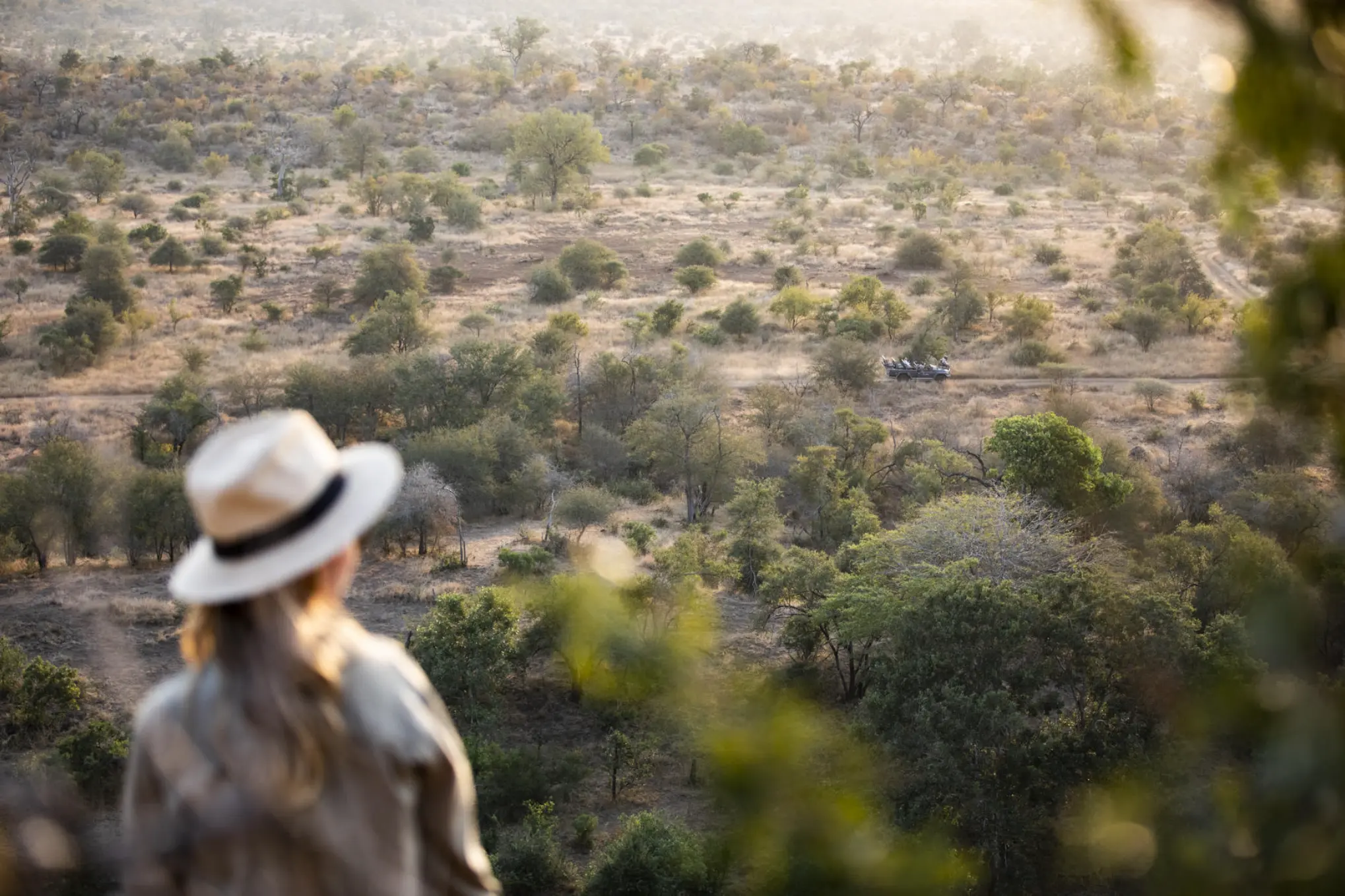
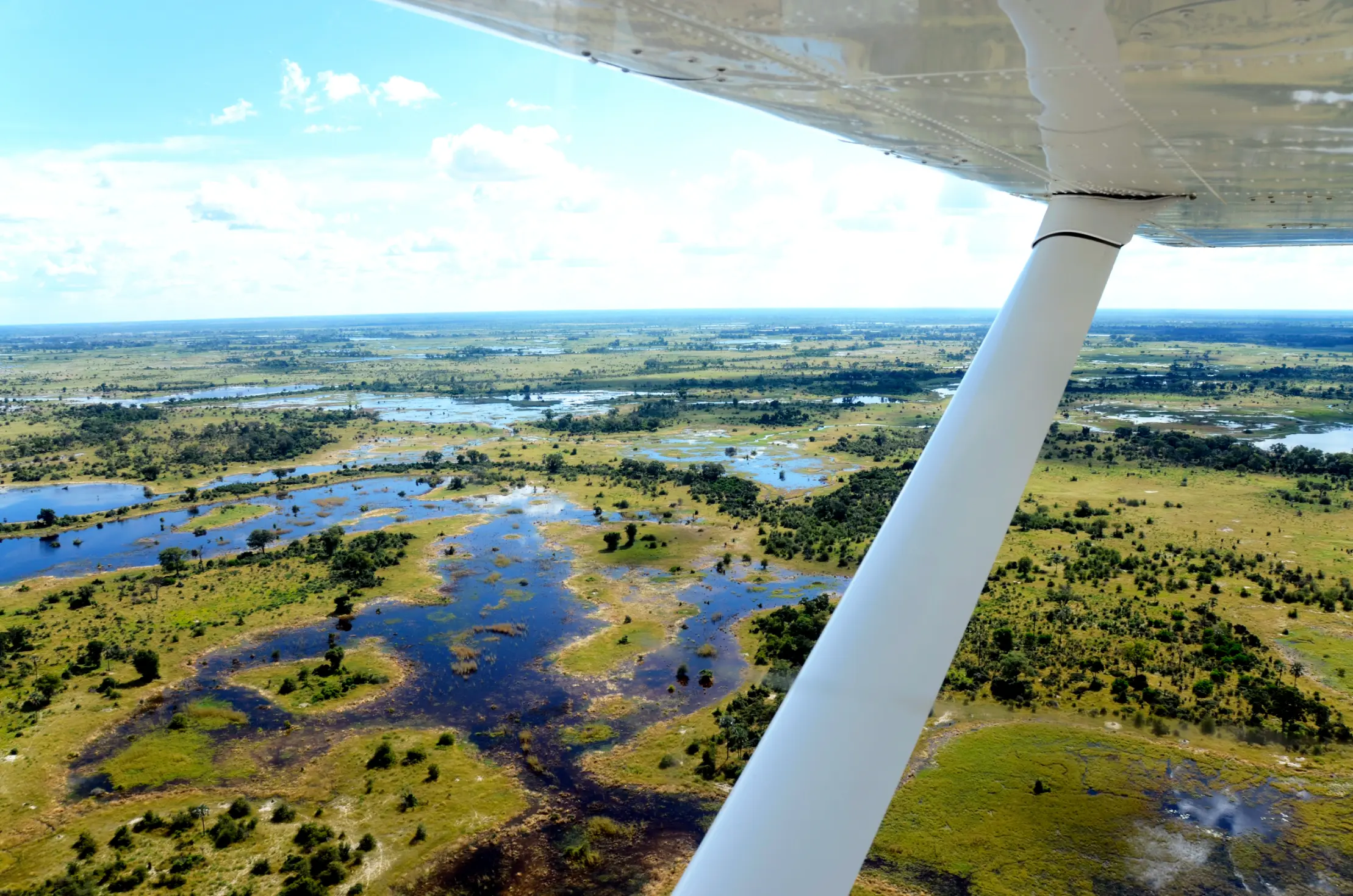
For many guests, these flights add to the experience. Seeing the Okavango Delta’s islands, channels, and animal paths from above helps reveal the scale of the ecosystem.
However, travelers who dislike small aircraft or frequent camp changes may find South Africa more comfortable.
Exclusivity and Privacy
Botswana has a strong reputation for exclusivity because many of its camps are small and located in private concessions with limited accommodation.
In carefully chosen areas, guests may spend an entire game drive encountering very few other vehicles. Privacy is created through remote locations, restricted access, and a low concentration of camps.
South Africa can offer an equally private experience, but it achieves this differently.
Private reserves adjoining Kruger offer limited-access game viewing, expert guide-and-tracker teams, exclusive-use villas, and private vehicles. South Africa also provides more properties with extensive facilities for travelers who want seclusion without sacrificing space, dining, or wellness experiences.
Botswana’s exclusivity is often defined by remoteness. South Africa’s is more commonly delivered through personalized service, private accommodation, and carefully managed access to private reserves.
Style of Safari Activities
Game drives form the foundation of safaris in both countries, but Botswana generally offers a broader combination of land- and water-based activities.
Depending on seasonal water levels and camp location, an Okavango Delta itinerary may include:
- Game drives
- Mokoro excursions
- Motorboat safaris
- Guided bush walks
- Seasonal fishing
- Birdwatching
A mokoro excursion is slower and quieter than a traditional game drive. It is less about covering large distances and more about observing waterways, birdlife, plants, and smaller details within the Delta.
Chobe adds another dimension through river safaris, allowing travelers to observe elephants, hippos, crocodiles, and water birds from the water.
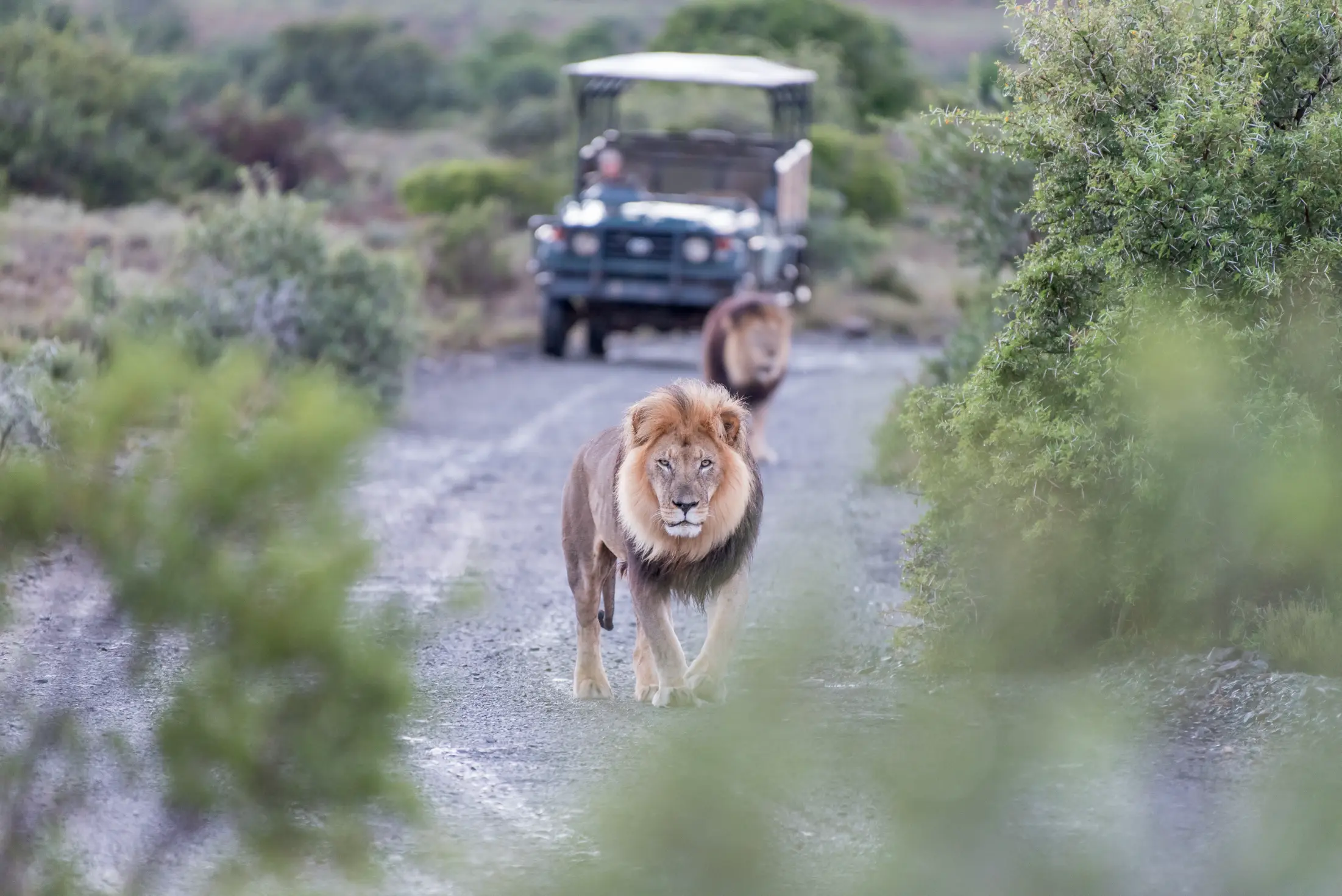
South Africa places greater emphasis on the classic vehicle-based safari, particularly in Greater Kruger and Sabi Sand. Walking, conservation, and tracking activities may be available at selected lodges, but expertly guided game drives remain the principal focus.
Travelers interested in experiences beyond the vehicle can explore our Off-Track Adventures and walking safaris.
Overall Value
South Africa generally offers more flexibility across different luxury budgets.
Its larger accommodation network and broader transfer options allow a journey to be adjusted according to lodge category, location, and overall trip length. Travelers may invest more heavily in a private safari lodge while choosing a different accommodation style in Cape Town or the Winelands.
Botswana’s small camps, private concessions, and light-aircraft transfers often result in a higher overall trip cost. The value lies in access to remote wilderness, low guest numbers, and a highly immersive safari environment.
This does not mean every Botswana safari is more expensive than every South African safari. Seasonality, private vehicles, exclusive-use accommodation, and camp selection can change the comparison considerably.
However, South Africa typically offers more options to adjust the overall budget without altering the essential structure of the journey.
Wildlife and Signature Safari Experiences
South Africa — Classic Big Five Viewing
South Africa is one of the strongest choices for travelers seeking a classic Big Five safari.
Kruger National Park and its surrounding private reserves support lions, leopards, elephants, buffalo, and rhinos, alongside wild dogs, cheetahs, giraffes, zebras, antelope, and diverse birdlife.
Private-reserve guides and trackers use their knowledge of territories, recent tracks, and animal behavior to interpret the landscape and locate wildlife.
The experience is not simply about completing a checklist of five animals. A skilled guide may spend time examining tracks, discussing predator behavior, or waiting quietly for an animal to emerge rather than moving rapidly between sightings.
South Africa, therefore, suits travelers who want reliable wildlife viewing within a recognizable and highly refined safari format.
Botswana — Wildlife Shaped by Water and Vast Landscapes
Botswana’s safari experience is strongly influenced by the movement of water.
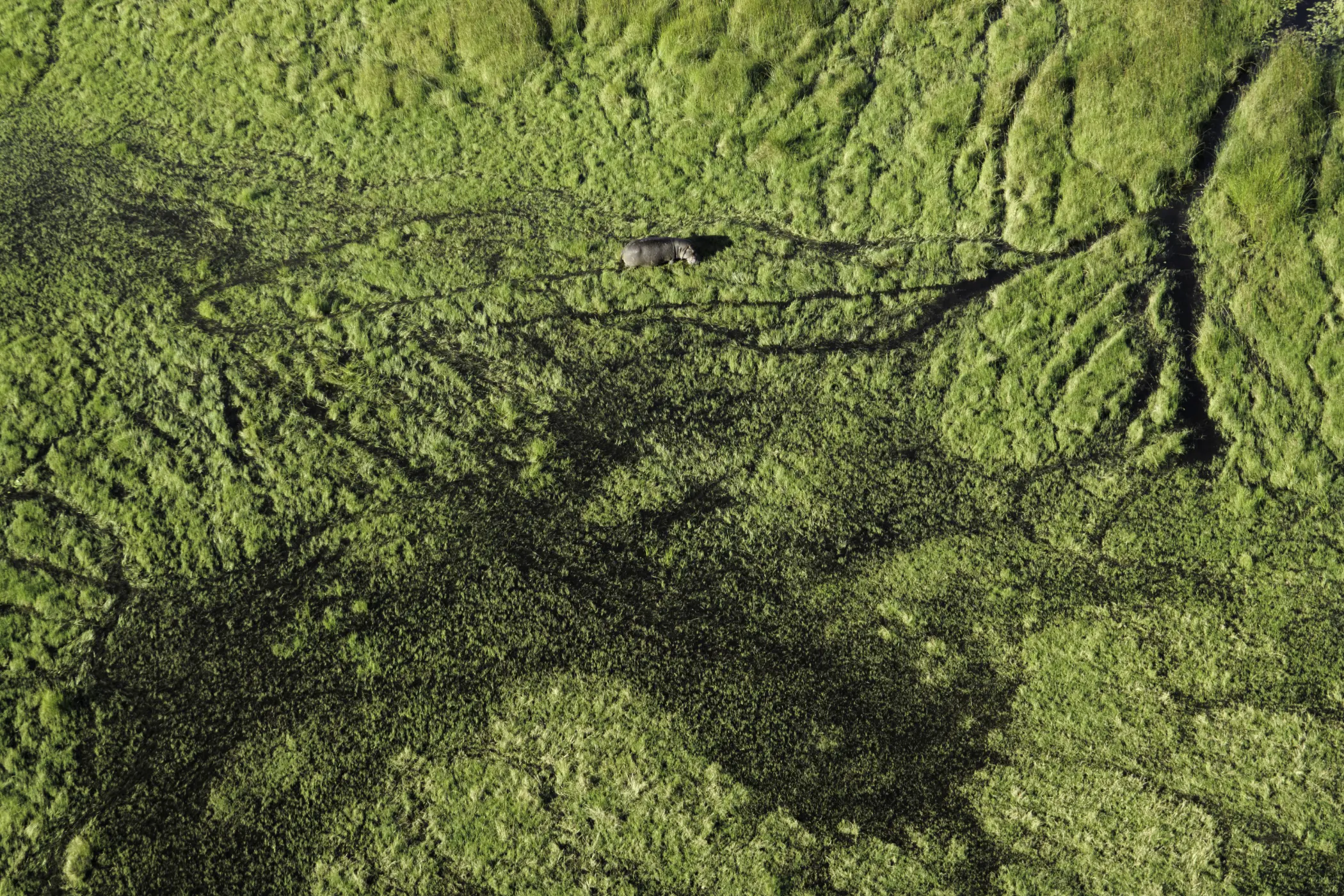
The Okavango Delta transforms sections of the Kalahari into a seasonal network of waterways, lagoons, islands, and floodplains. Routes and activities may change as water levels rise or fall.
One camp may provide excellent boating and mokoro excursions, while another offers stronger land-based game viewing across dry islands and floodplain edges.
Botswana is particularly compelling for travelers interested in:
- Elephants
- African wild dogs
- Lions and other predators
- Wetland wildlife
- Water birds
- Seasonal wildlife movement
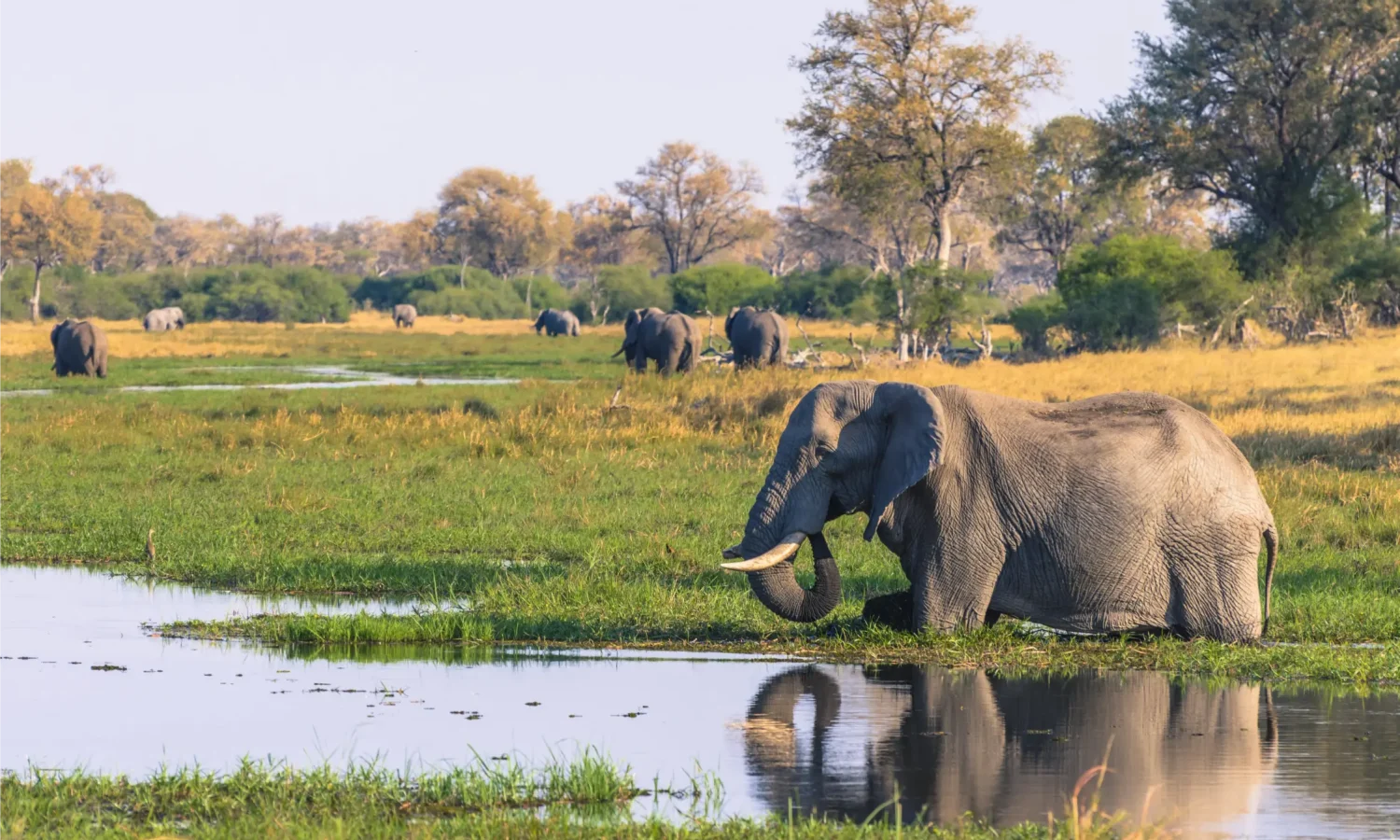
Chobe is well known for elephants gathering near the river, while Moremi combines waterways, woodland, grasslands, and seasonal floodplains within the wider Okavango ecosystem.
The difference is not always the number of animals seen. It is the experience of watching wildlife respond to an active, changing landscape.
Travelers wanting to explore these contrasting ecosystems can consider the Botswana Okavango Safari.
Best Safari Regions in South Africa
Sabi Sand and Greater Kruger
Sabi Sand is often recommended for travelers seeking a refined introduction to safari.
Its private reserves form part of the wider Greater Kruger ecosystem, allowing wildlife to move across an extensive conservation landscape.
The region is particularly suitable for guests prioritizing:
- Big Five game viewing
- Leopard sightings
- Experienced guide-and-tracker teams
- Private-reserve access
- Sophisticated safari accommodation
Compared with Botswana, the experience is more structured around morning and afternoon game drives. It is also easier to remain at one lodge for several nights instead of moving between camps.
Choose Sabi Sand or Greater Kruger when wildlife reliability, guiding and lodge comfort matter more than water-based safari activities.
Madikwe Game Reserve
Madikwe is a valuable option for families and multigenerational groups.
The reserve is malaria-free and offers Big Five wildlife, family suites, private villas and lodges with child-focused programs. Its location also allows for relatively straightforward connections from Johannesburg.
Compared with Botswana, Madikwe usually requires fewer logistical compromises. It does not provide the Okavango’s wetland environment, but it can deliver a high-quality safari with simpler transfers and broader family accommodation choices.
Choose Madikwe when:
- Traveling with younger children
- Avoiding malaria-risk regions is a priority
- The itinerary needs simpler transfers
- Family-focused accommodation is important
For additional planning advice, explore Ker & Downey® Africa’s luxury family safaris.
Tswalu Kalahari
Tswalu reveals a less familiar side of South Africa.
Instead of the woodland and savannah associated with Greater Kruger, travelers experience the open landscapes, colors, and wildlife of the southern Kalahari.
The focus may extend beyond the Big Five to include desert ecology, conservation, tracking, and species adapted to an arid environment.
Tswalu is likely to appeal to travelers considering Botswana who value space, seclusion, and unusual landscapes. It also provides a malaria-free safari option.
Cape Town and the Cape Winelands
Cape Town is not a safari destination, but it plays an important role in the South Africa-versus-Botswana decision.
South Africa allows travelers to move from the bush to a sophisticated coastal city without crossing an international border. An itinerary may include:
- Table Mountain
- The Cape Peninsula
- Restaurants and private dining
- Galleries and design
- Cape Winelands experiences
- Coastal landscapes
For many travelers, this is South Africa’s main advantage. Botswana cannot provide the same safari, city, and wine combination within a single-country journey.
Best Safari Regions in Botswana
Okavango Delta and Moremi Game Reserve
The Okavango Delta is Botswana’s defining safari environment.
It combines permanent waterways, seasonally flooded plains, dry islands, grasslands, and woodland. Moremi Game Reserve protects part of the eastern Delta and supports diverse wildlife across these habitats.
Camp location is particularly important.
Some camps offer stronger water activities during certain months, while others maintain more consistent vehicle access. A property should therefore be chosen according to the traveler’s preferred activities, not simply its level of luxury.
Choose the Okavango Delta when the landscape and variety of safari activities matter as much as individual wildlife sightings.
The Luxury of Time Botswana Safari combines the Okavango with other contrasting Botswana regions for a slower, more immersive journey.
Chobe National Park
Chobe is often the most accessible introduction to Botswana.
The Chobe Riverfront is known for elephants and other wildlife gathering near the river, while boat safaris provide a strong contrast to traditional game drives.
Chobe also pairs well with Victoria Falls, making it suitable for travelers who want Botswana to be part of a wider Southern African itinerary.
The most accessible riverfront areas can feel busier than Botswana’s private concessions. Lodge location, private activities, and time of day should therefore be considered carefully.
Choose Chobe when elephants, river safaris, and ease of combination with Victoria Falls are key priorities.
The Victoria Falls to Botswana itinerary demonstrates how these destinations can work together.
Linyanti, Kwando, and Savuti
The Linyanti, Kwando, and Savuti regions suit travelers looking for a remote, land-focused safari.
Rivers and channels attract wildlife during the dry season, while private-concession access can create a lower-density game-viewing experience.
Compared with the central Delta, these regions may place greater emphasis on:
- Game drives
- Predator sightings
- Walking safaris
- Wildlife gathering near permanent water
- Private-concession access
Choose these regions when you want Botswana’s privacy but still prefer a traditional vehicle-based safari.
Makgadikgadi Pans and the Central Kalahari
Botswana’s desert regions provide an important contrast to its northern wetlands.
The Makgadikgadi Pans and Central Kalahari are characterized by salt pans, grasslands, open horizons, and strong seasonal change.
These areas are not always selected for continuous high-density game viewing. Their appeal lies in the landscape, desert-adapted wildlife, and the feeling of space.
Combining the Kalahari or Makgadikgadi with the Okavango can give a Botswana itinerary greater variety by pairing desert and wetland ecosystems.
Luxury Safari Accommodation in South Africa and Botswana
Luxury Lodges in South Africa
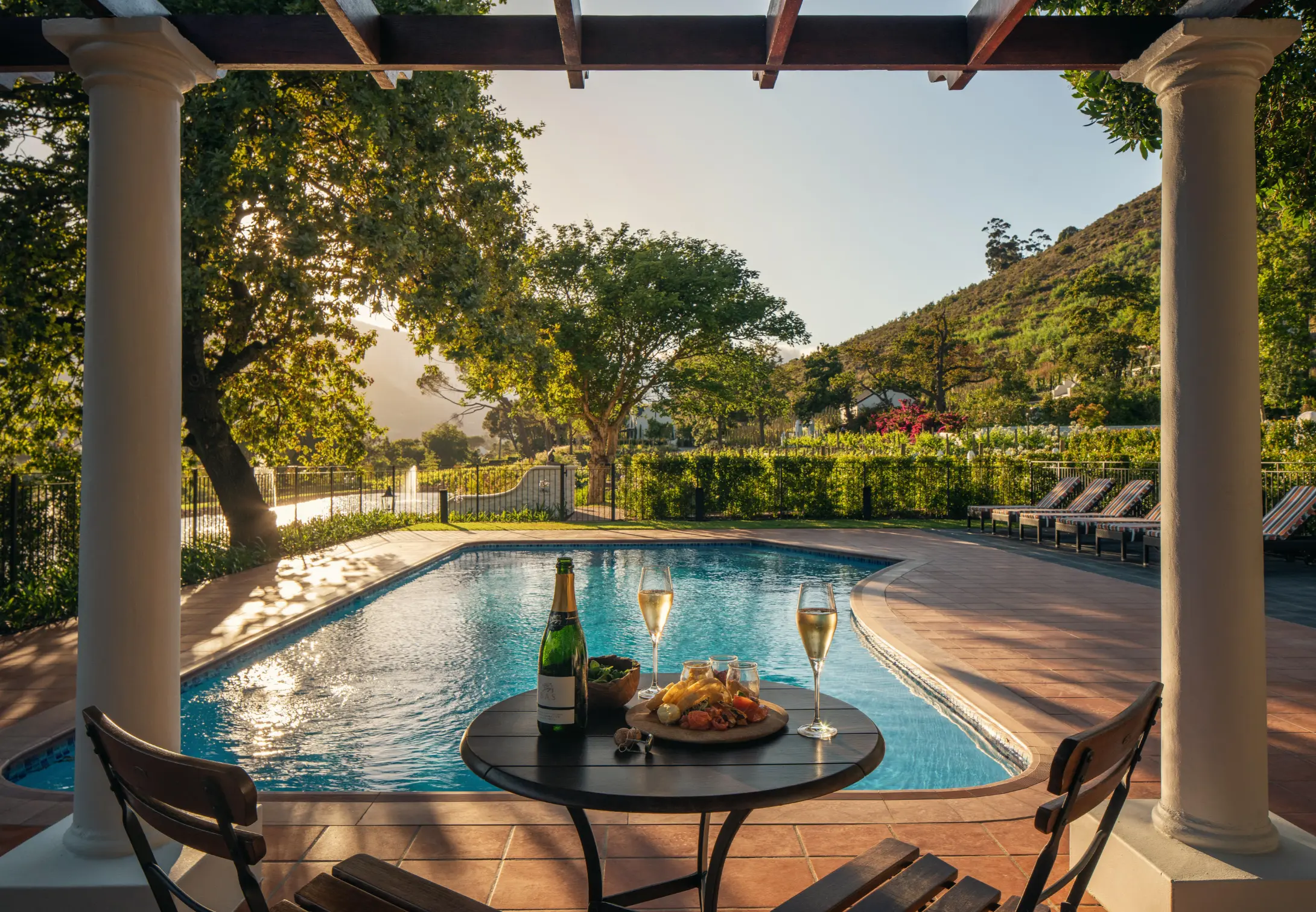
South Africa offers a broader range of accommodation styles.
Travelers can choose between:
- Intimate safari lodges
- Contemporary camps
- Exclusive-use villas
- Private family residences
- Wellness-focused properties
- Traditional tented camps
Private villas may include dedicated guides, chefs, hosts, and flexible daily schedules. This is particularly useful for families or multigenerational groups who do not want to follow a fixed camp timetable.
South African lodges also tend to place considerable emphasis on food, wine, design, spa treatments, and the experience between game drives.
Choose South Africa when the lodge itself is expected to play a major role in the vacation.
Luxury Camps in Botswana
Botswana’s finest camps tend to be smaller and closely integrated with their surroundings.
The luxury is often expressed through location, privacy, and access rather than the number of facilities. A camp may contain only a small collection of suites yet offer direct views over a floodplain, a highly experienced guiding team, and the ability to begin an activity without traveling through a populated area.
Travelers should not assume that tented accommodation means compromising on comfort. However, the experience may feel more connected to the sounds, temperature, and rhythms of the wilderness than an enclosed lodge in South Africa.
Examples within Ker & Downey® Africa’s Botswana portfolio include:
The right accommodation choice ultimately depends on the same questions as the country choice: how much you want to move, how immersive you want each stop to feel, and what kind of access matters most. Our safari experts often match camps to the style of experience guests are looking for rather than simply recommending the most luxurious property.
Best Time to Visit South Africa and Botswana
Both countries can be visited throughout the year, but the season changes the style of the safari. Camp selection is often just as important as the month of travel.
Season | South Africa | Botswana |
May–September | Cooler, drier conditions across many northern safari areas | Dry season with wildlife concentrating near water and seasonal Delta flooding |
October–November | Warmer weather and the approach of summer rain | Hotter conditions before the rains, with wildlife focused around remaining water |
December–March | Green season in Greater Kruger and summer conditions in Cape Town | Green landscapes, migratory birds, summer rainfall and seasonal desert wildlife |
April | Transition toward cooler and drier safari conditions | Transitional conditions as vegetation and water levels change |
When to Choose South Africa
The best time for South Africa depends on which regions are being combined.
The cooler, drier months generally suit wildlife-focused journeys in Greater Kruger. Vegetation is less dense, and animals may be easier to observe near permanent water sources.
The summer green season brings warmer temperatures, dramatic skies, birdlife, and young animals.
Cape Town follows a different seasonal pattern. Travelers prioritizing warmer and drier conditions in the Cape may prefer the Southern Hemisphere summer.
There is therefore no single perfect month for every part of South Africa. The itinerary should be planned around the traveler’s highest priority.
When to Choose Botswana
Botswana’s most popular safari period falls during the dry season.
The Okavango’s seasonal floodwaters may spread through parts of the Delta during Botswana’s drier winter months, creating a combination of waterways, clearer skies and wildlife gathering near permanent water.
The green season can offer:
- Lush landscapes
- Migratory birdlife
- Dramatic skies
- Seasonal wildlife events
- Lower rates at selected camps
Botswana is not one uniform ecosystem. Conditions can differ considerably between the Delta, Chobe, Linyanti, and the Kalahari.
Camp location may therefore be as important as the month of travel.
Planning Your South Africa or Botswana Safari
Ideal Trip Length
A South African safari can work well with four to seven safari nights, particularly when combined with Cape Town or the Winelands.
A complete South African safari-and-city journey will generally feel more balanced with approximately ten days or longer.
Botswana benefits from seven to ten nights across at least two complementary areas. For example, travelers may combine a water-focused Delta camp with a land-focused concession.
Adding Chobe, the Kalahari, or Victoria Falls requires additional time.
Botswana should not be rushed into a short itinerary. Its appeal lies partly in settling into each camp and experiencing the differences between regions.
Internal Flights and Road Transfers
South Africa offers more transfer choices.
Depending on the destination, travelers may use:
- Scheduled domestic flights
- Charter flights
- Lodge-to-lodge flights
- Private road transfers
- Self-contained safari transfers
Botswana itineraries rely more heavily on light aircraft.
Soft luggage restrictions and aircraft weight limits must be considered before departure. Flights may also include additional airstrip stops.
The aerial journey is nevertheless part of the experience. Seeing the Okavango’s islands and channels from above helps travelers understand its scale.
Health and Family Planning
Health requirements and malaria risk vary by region and season. Travelers should seek current professional medical advice before departure.
South Africa provides several malaria-free safari options, including Madikwe, Tswalu, and selected Eastern Cape reserves.
Botswana can be highly rewarding for families, but individual camp policies require careful planning.
Minimum ages may apply to:
- Walking safaris
- Mokoro excursions
- Shared game drives
- Certain boating activities
- Individual camp accommodation
The right property should be selected based on the children’s ages and interests, rather than making a general decision based solely on the country.
Can You Combine South Africa and Botswana?
Yes. Combining both destinations creates one of Southern Africa’s most balanced journeys.
A typical itinerary may begin in Cape Town and the Winelands, continue to a private reserve in Greater Kruger, and finish in the Okavango Delta.
Another option combines a South African safari with Chobe and Victoria Falls.
South Africa introduces variety, straightforward logistics, and classic Big Five game viewing. Botswana then changes the rhythm through light-aircraft transfers, waterways, and smaller remote camps.
Allow approximately 12 to 14 days for a meaningful combination. Shorter trips are possible, but including too many stops can result in excessive transfer time.
Travelers considering both destinations can explore Southern Africa safaris or the Southern Africa’s Finest: South Africa, Victoria Falls and Botswana itinerary.
South Africa vs Botswana for a Family Safari
South Africa is generally the easier choice for families with younger children.
It offers:
- Malaria-free safari regions
- Private family villas
- Shorter transfer options
- Child-focused programs
- Greater flexibility between safari activities
- The option to include Cape Town and the coast
Botswana often suits families with older children or teenagers who are comfortable with light-aircraft travel and genuinely interested in a safari-centered vacation.
Moving between camps can create a strong sense of adventure, while mokoro excursions and boat safaris provide variety beyond game drives.
However, not every Botswana camp accepts children of all ages, and some activities have minimum age requirements. Families should therefore be matched to individual camps.
South Africa offers a simpler family journey. Botswana offers the more adventurous one.
South Africa vs Botswana for a Honeymoon
Both destinations can provide a private and sophisticated honeymoon, but they suit different travel styles.
South Africa is ideal for couples wanting variety. A journey can combine a private safari lodge with Cape Town, the Winelands, and an Indian Ocean beach extension.
Botswana is better suited to couples wanting to disconnect almost completely. Small camps, remote airstrips, private decks, and quiet wilderness areas create a honeymoon centered on time together.
South Africa offers a broader celebration with safari, food, wine, and coast.
Botswana offers deeper wilderness immersion and greater seclusion.
Couples can explore additional ideas through Ker & Downey® Africa’s luxury safari honeymoon experiences.
Which Safari Destination Is Right for You?
Choose South Africa If:
Choose South Africa when:
- You are planning your first safari.
- You want straightforward transfers.
- You are traveling with younger children.
- You need a malaria-free safari option.
- You want to combine a safari with Cape Town or the Winelands.
- You prefer staying longer at one lodge.
- You value private villas and extensive facilities.
- You have limited time.
South Africa provides a classic safari experience with greater flexibility around the wider vacation.
Choose Botswana If:
Choose South Africa when:
- Wilderness is the main priority.
- You are comfortable traveling by light aircraft.
- You prefer smaller camps.
- You want water- and land-based safari activities.
- You value low guest numbers.
- You are especially interested in elephants or wetland ecosystems.
- You have time to visit at least two contrasting regions.
- You want safari to define almost the entire journey.
Botswana provides a more immersive and adventurous safari rhythm.
Choose Both If:
Choose both when you have approximately two weeks and want to balance variety with immersion.
Greater Kruger provides a focused Big Five safari. Cape Town introduces an urban and cultural dimension. The Okavango Delta then adds a water-shaped wilderness that feels completely different.
When planned carefully, the two countries complement rather than repeat one another.
The Ker & Downey® Africa Perspective
A common misconception is that South Africa is the conventional choice, while Botswana is automatically the more exclusive or adventurous one.
The reality is more nuanced.
A South African private reserve can provide exceptional privacy, sophisticated guiding, and highly personalized service. Botswana can also be remarkably polished and comfortable, even when a camp is located far from permanent roads.
The better question is not, “Which country is more luxurious?”
It is, “Which expression of luxury suits the traveler?”
For some guests, luxury means a private villa, carefully considered dining, wellness facilities, and the ability to continue to Cape Town after safari.
For others, it means landing on a remote airstrip, staying in a camp with very few guests, and watching elephants cross a floodplain from a private deck.
Choose South Africa for flexibility, variety, and a refined classic safari.
Choose Botswana for immersion, remoteness, and an experience shaped by water, season, and movement.
When time allows, combine them. The contrast is what makes the journey work.
Every safari we design is tailored to the traveler rather than the destination. If you’re still deciding between South Africa and Botswana, our African travel experts can help you choose the journey that’s right for you.
South Africa vs Botswana Safari: Frequently Asked Questions
/01
Is South Africa or Botswana Better for a First Safari?
+Botswana can also suit first-time visitors, particularly those comfortable with small aircraft and a more safari-focused itinerary.
Read Ker & Downey® Africa’s guide on where to go on your first safari for further advice.
/02
Which Destination Has Better Wildlife?
+South Africa is especially strong for classic Big Five viewing and rhino opportunities in selected reserves.
Botswana stands out for elephants, African wild dogs, wetland wildlife, and the way animals respond to seasonal water.
The right choice depends on your preferred species and style of safari.
/03
Is Botswana More Exclusive Than South Africa?
+However, South Africa’s private reserves, private vehicles, and exclusive-use villas can deliver an equally private experience.
Botswana’s exclusivity is generally created by remoteness, while South Africa's is more often created through personalized accommodation and service.
/04
Which Destination Is Better for Families?
+Botswana can be excellent for older children and teenagers who enjoy wildlife, small-aircraft travel, and a more adventurous daily rhythm.
/05
Is South Africa or Botswana Better Value?
+/06
Which Destination Is Better for a Honeymoon?
+South Africa suits couples wanting a greater variety, including safari, Cape Town, wine experiences, and an Indian Ocean extension.
Both can provide an exceptional honeymoon, but their overall rhythms differ.
/07
Can You Combine South Africa and Botswana in One Trip?
+Consider pairing Cape Town and a Greater Kruger safari with the Okavango Delta, or combining a South African private reserve with Chobe and Victoria Falls.
/08
How Many Days Do You Need for South Africa or Botswana?
+Botswana generally deserves seven to ten nights across at least two safari areas.
A combined South Africa and Botswana journey is best planned over approximately 12 to 14 days.
Ready to Start Planning Your Southern African Safari?
Explore luxury journeys through South Africa and Botswana, or use the Ker & Downey® Africa Safari Planner to begin creating a bespoke itinerary based on your preferred pace, wildlife interests, accommodation style, and available travel time.
Curated Packages
Signature journeys across Africa
Our expert team crafts journeys that transcend luxury. Each itinerary is shaped by the spirit of the land and the wisdom of its people — opening doors to experiences few can imagine, and even fewer will ever access.
May - October
|
10 DAYS
South Luangwa Walking Safari
All Year Round
|
9 DAYS
‘Out of Africa’ Safari in Kenya
All Year Round
|
8 DAYS
Best of Egypt LuxVenture®
June-October
|
10 DAYS
Electric Vehicle Safari in Kenya
15 June - 15 November
|
7 DAYS
Luxury Tented Safari in Tanzania
All Year Round
|
10 DAYS
Cairo + Luxury Nile Cruise
All Year Round
|
12 DAYS
Tanzania and Zanzibar Safari
All Year Round
|
12 DAYS
South Africa Art, Wine & Wilderness Safari
Jan, Feb, Jun – Sept
|
13 DAYS
Gorilla Trekking, Ngorongoro Crater & Serengeti
May to October
|
8 DAYS
Mad Max Safari Adventure
All Year Round
|
7 DAYS
Luxury Gorilla Trekking Safari in Rwanda
May-October
|
8 DAYS
Luxury Treehouse Safari to Botswana LuxVenture®
All Year Round
|
9 DAYS
Luxury Safari in Kruger National Park & Cape Town
All Year Round
|
7 DAYS
Chobe River Cruise & Okavango Delta Safari
All Year Round
|
17 DAYS
Southern Africa: Framed and Untamed
Set Departure 2027
|
12 DAYS
The Great Egyptian Eclipse
All Year Round
|
10 DAYS
The Active Africa Circuit – A Luxury Sport Safari
All Year Round
|
17 DAYS
Luxury Mauritius & South Africa Experience
All year round
|
12 DAYS
Luxury Family Safari: South Africa & Victoria Falls
April-October
|
10 DAYS
Best of Botswana Safari
June-October
|
9 DAYS
Sub Saharan Kenya Safari Experience
June-October
|
8 DAYS
Tanzania Northern Circuit Safari
All Year Round
|
14 DAYS
Luxury South Africa and Mozambique Honeymoon
June-February
|
13 DAYS
A Cultural Safari Tanzania Zanzibar
Year Round
|
10 DAYS
Natural East Africa Wonders Safari
July-September
|
6 DAYS
Horseback Safari in Kenya
All Year Round
|
16 DAYS
Ultimate East Africa Safari
All Year Round
|
12 DAYS
Stargazing Desert Safari in Namibia
All Year Round
|
9 DAYS
Luxury Adventure through Namibia
All Year Round
|
14 DAYS
Southern Africa’s Finest: SA, Victoria Falls & Botswana
May to October | November to April
|
11 DAYS
Spirit of Zambia Safari
Year Round
|
18 DAYS
Southern Africa Luxury Bush & Beach Escape
All Year Round
|
10 DAYS
Africa Safari: Uganda & Zambia’s Great Waterways
Jan, Feb, Jun – Sept
|
5 DAYS
Mountain Gorilla Trekking in Rwanda
Year Round
|
11 DAYS
Adventure and Exploration in the Seychelles
June-October
|
7 DAYS
African Wild Dog Safari
All Year Round
|
13 DAYS
Elements of Southern Africa: A Curated Safari
All Year Round
|
10 DAYS
Tanzania & Zanzibar Family Holiday
All Year Round
|
11 DAYS
Luxury Safari in Zambia
All Year Round
|
10 DAYS
Luxury Tanzania Honeymoon LuxVenture®
All year round
|
9 DAYS
9-day Victoria Falls to Botswana Luxury Safari
June-October
|
9 DAYS
The Great Wildebeest Migration Safari in Tanzania
All Year Round
|
10 DAYS
The Luxury of Time – Botswana Unhurried
All Year Round
|
12 DAYS
Culinary Journey to Morocco
All year round
|
9 DAYS
Beaches of Seychelles Vacation
All Year Round
|
10 DAYS
Botswana & Victoria Falls Adventure
March-December
|
10 DAYS
Luxury Private Safari in Zambia
All Year Round
|
13 DAYS
Amboseli, Lewa and Masai Mara Safari
All Year Round
|
9 DAYS
Botswana Okavango Honeymoon LuxVenture®
June - Sept
|
8 DAYS
Rivers & Rainforests: A Ugandan Safari
Year Round
|
11 DAYS
Luxury Seychelles Honeymoon and Couples Vacation
All Year Round
|
8 DAYS
Luxury Namibia Safari
All Year Round
|
Day Trip to Antarctica LuxVenture®
Year Round
|
8 DAYS
African Wild Dog Safari in Zimbabwe
All Year Round
|
6 DAYS
Luxury Morocco Vacation
Year Round
|
15 DAYS
The Ultimate Southern Africa Bush & Beach
May - October
|
12 DAYS
The Shape of Namibia – Luxury Namibia Safari
11 - 20 May 2027
|
10 DAYS
The African Table: A Culinary Safari
All Year Round
|
13 DAYS
Elephant Safari in South Africa, Victoria Falls & Botswana
March to June
|
10 DAYS
Zimbabwe Victoria Falls & Safari LuxVenture®
All Year Round
|
11 DAYS
Wild Hearts, Island Dreams: Luxury Safari Tanzania and Zanzibar
June - Sept
|
11 DAYS
Uganda Done Right
June - Sept
|
15 DAYS
Gorillas & Big Five Safari Adventure
June-August
|
12 DAYS
Rovos Rail and Zambezi River Escape
All Year Round
|
12 DAYS
Tanzania & Zanzibar Honeymoon Safari
All Year Round
|
8 DAYS
Luxury Kenya Safari
All Year Round
|
11 DAYS
Luxury Egypt Experience
Dec – Mar
|
7 DAYS
Wildebeest Calving Season Safari
Feb – May, Sep – Dec
|
10 DAYS
Luxury Journey Through Morocco
All Year Round
|