Conquering Kili & the Climb for Conservation

Written by
Julie Graham
Images by: Ignas Salutary Lyimo (Iggy)
Months of checklists, gear laid out neatly on the bed, and late-night rabbit holes of “what to expect on the mountain.” Between work, life, and trying to squeeze in training hikes at sea level (Cape Town isn’t exactly known for its altitude), preparation felt both relentless and exhilarating. Every detail mattered. The right socks, the right layers, the right mindset. The mental prep was its own climb: picturing the mountain, feeling the burn in my legs, seeing the summit before I even took my first step.
But what truly powered us was the why. Climb for Conservation wasn’t just an adventure – it was a mission. Sarah, my colleague and fellow mountain dreamer at Ker & Downey® Africa, and I had long shared a passion for protecting Africa’s wild spaces. So when the opportunity came to climb for a cause – raising funds to protect lions, wildlife, and communities through the OKOA Fund and African Bush Camps Foundation – we didn’t hesitate. This wasn’t just about a bucket list. It was about impact. Every step and every breath with purpose behind it.
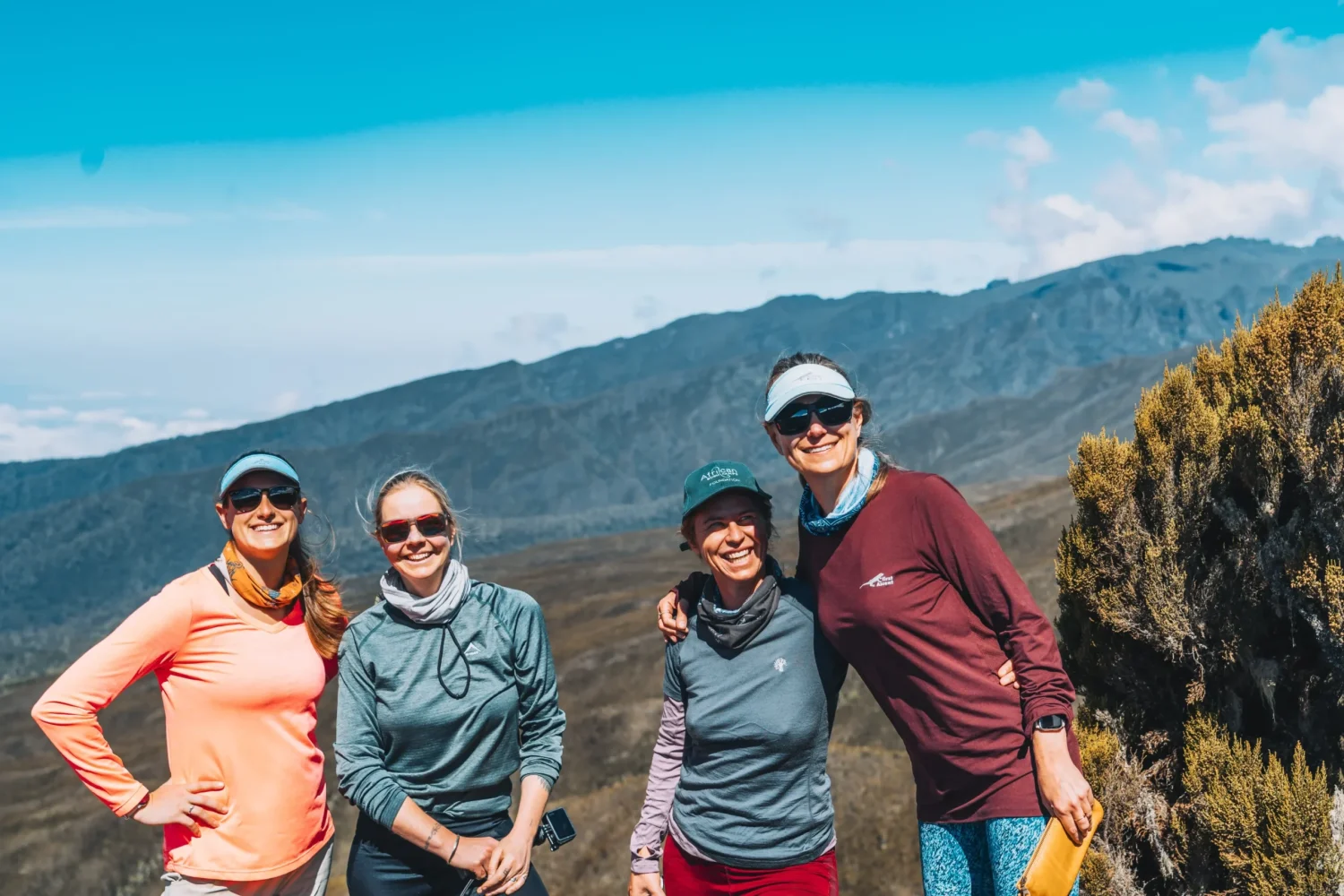
Soon, our team of six was locked in. Sarah and I were joined by Simone and Shannon – two Cape Town friends-of-friends who quickly became like family. The idea for the climb was, fittingly, born over glasses of wine. Separate conversations that somehow merged into one slightly wild but very determined plan. Add to that mix Charles, our ever-upbeat Arusha colleague, and Iggy, a local filmmaker with an eye for both grit and grace, and we had ourselves a crew. Different backgrounds. Same goal.
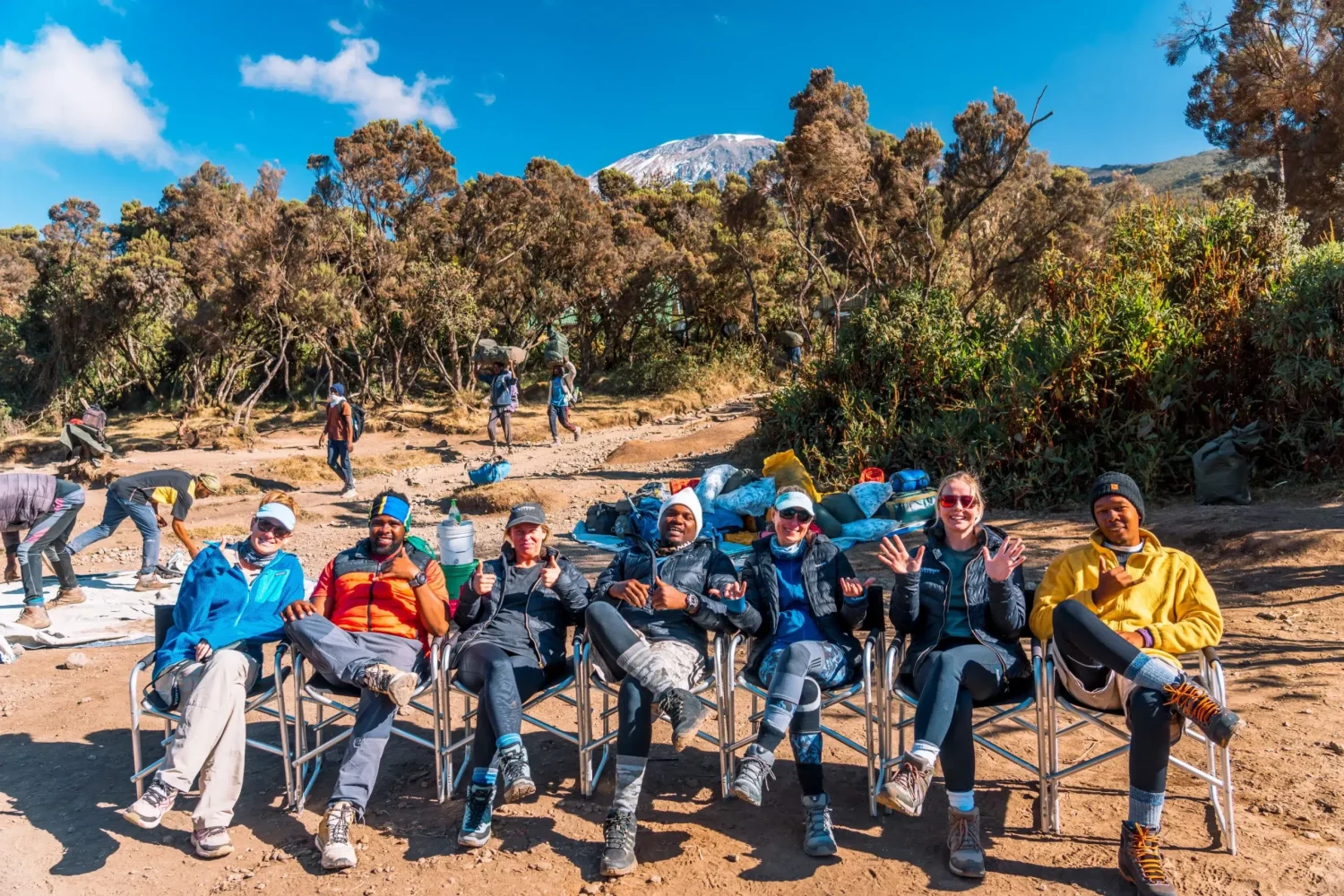
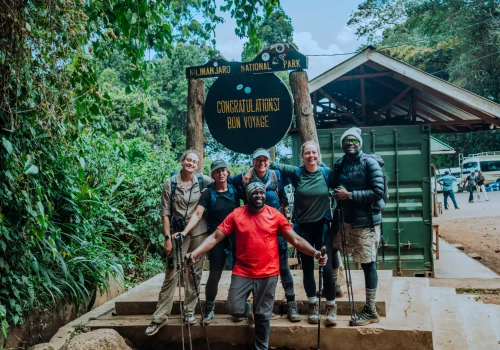
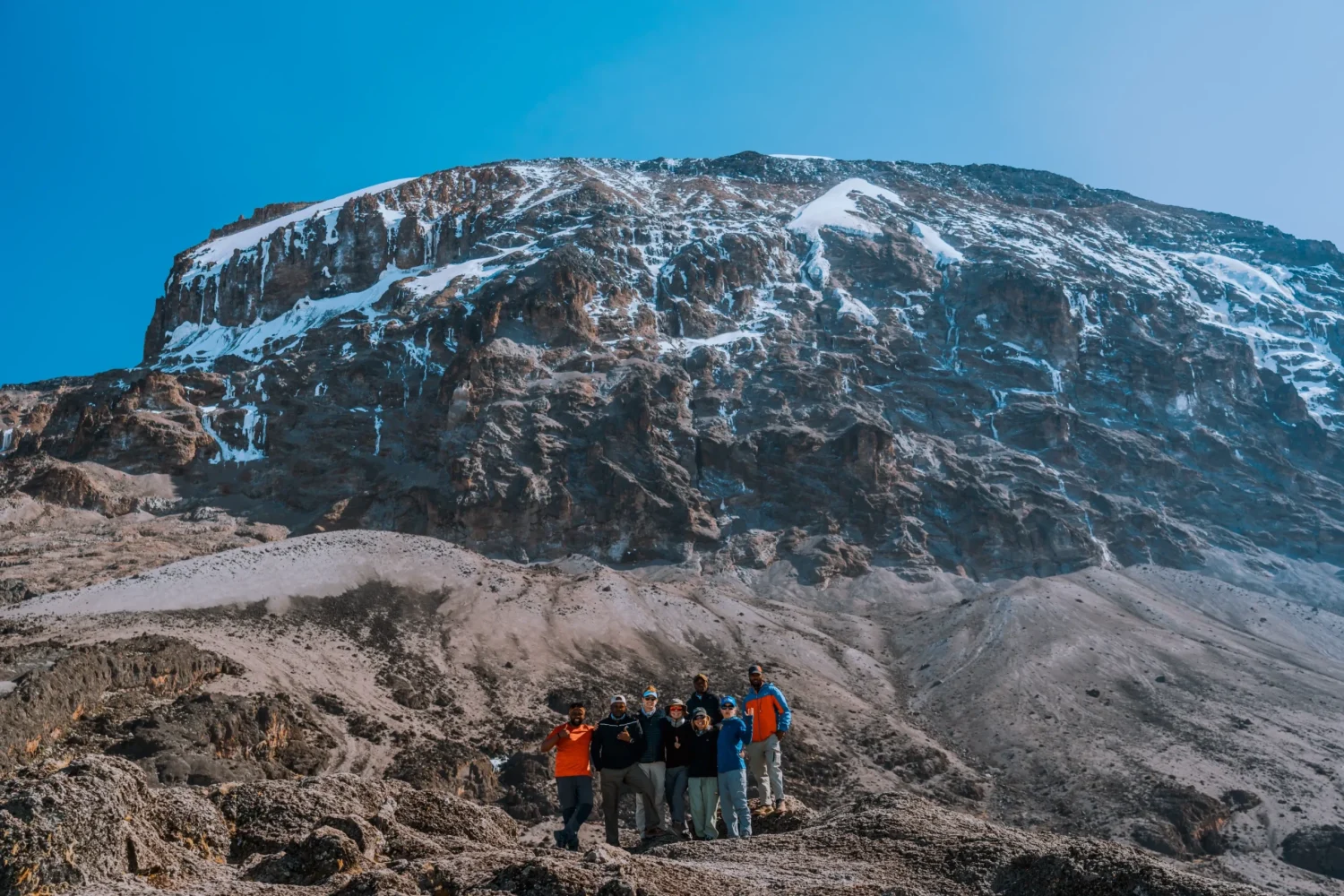
The team: Shannon, Paulo (Mountain Guide), Sarah, Charles, Simone, Julie and Iggy.
What started as a half-joking “we should climb Kilimanjaro one day” moment turned into gear lists, training hikes, shared WhatsApp groups and, eventually, booked flights. Somewhere along the way, it stopped being a fantasy and started feeling inevitable. Six people, one mountain, one mission.
The Moment It Became Real
Flying into Tanzania, the landscape unfolded like a promise. Mount Meru cut through the haze, and then, Kilimanjaro herself. Silent. Vast. Snow-capped. And high. Very high. For the first time, it hit me: this wasn’t a story we were going to tell one day. This was the story.
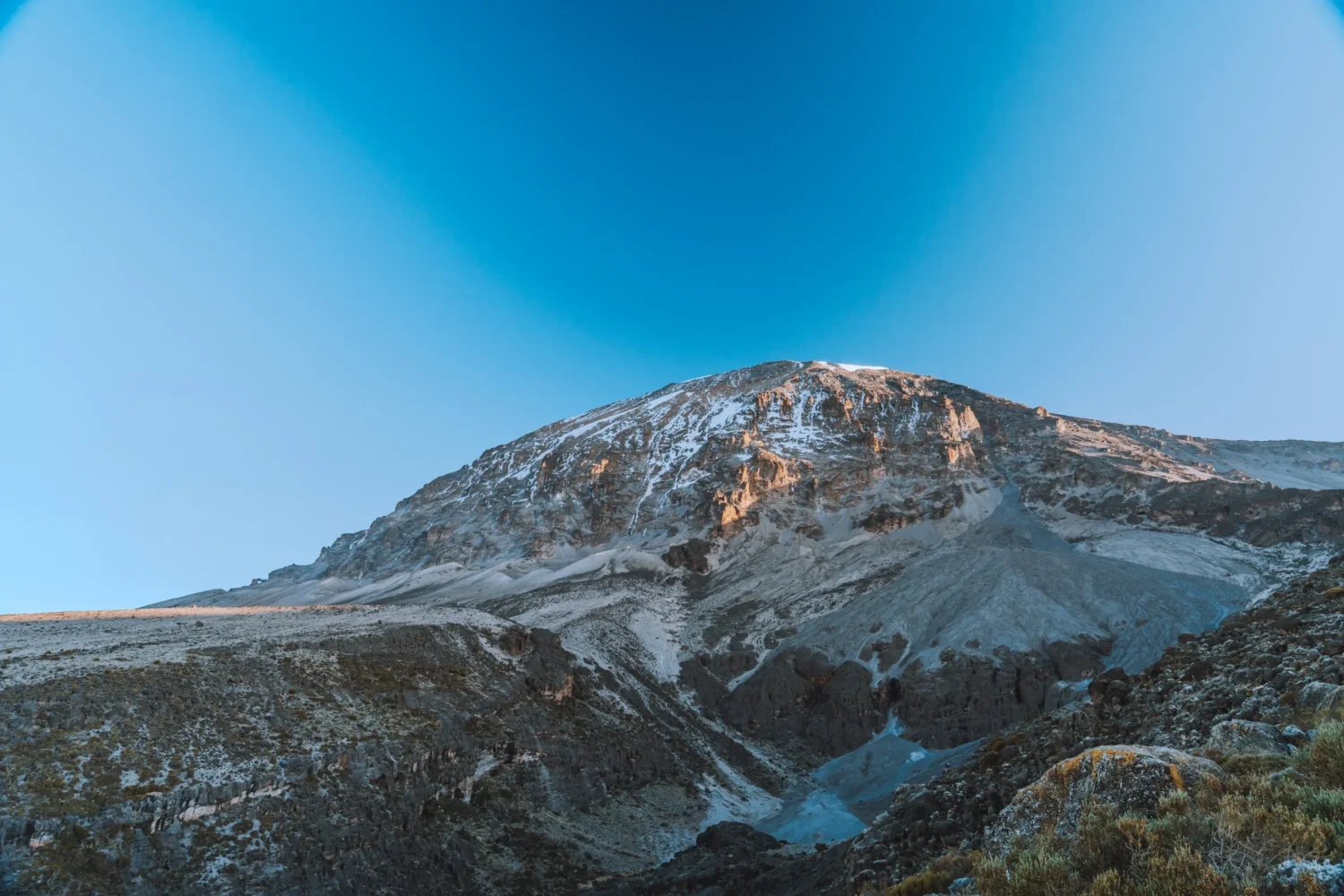
Silent. Vast. Snow-capped. And high. Very high.
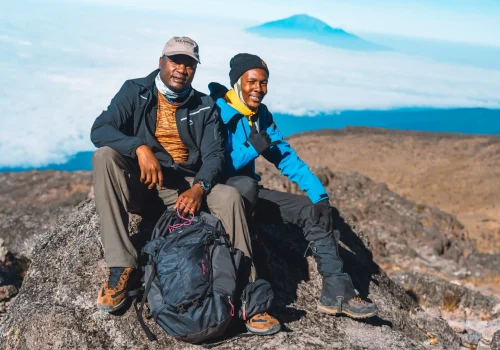
The night before the climb, we stayed at Lake Duluti Lodge; luxurious, calm, tucked among the trees. That’s where we met our guides, Paulo and Barrack – calm, confident, and mountain-strong. They carried an ease that only comes from experience. For Paulo, this would be his 297th summit up the mighty mountain. Charles joined us too, and together we unpacked, repacked, weighed, and fine-tuned every bag. Each item had its moment of scrutiny, and every “do we really need this?” paid off. We passed inspection with gold stars.
That night, the nerves were real. But so was the excitement. Tomorrow, we would begin.
Day 1: The Rainforest
And just like that, it did.
Morning light crept through the mist as our group of climbers, porters, mountain guides, and cooks loaded up and set off for the Machame Gate. The drive through Arusha was alive with sound and colour. Kids waved. Buses roared past. The air felt charged, as if the whole town knew where we were going.
We chose the Machame Route for a reason. It’s tough and diverse. The kind of route that gives you everything, from thick rainforest to alpine desert. And the kind of route that presents a challenge. It felt right for us: a team of nature lovers that liked things to feel real and unfiltered.
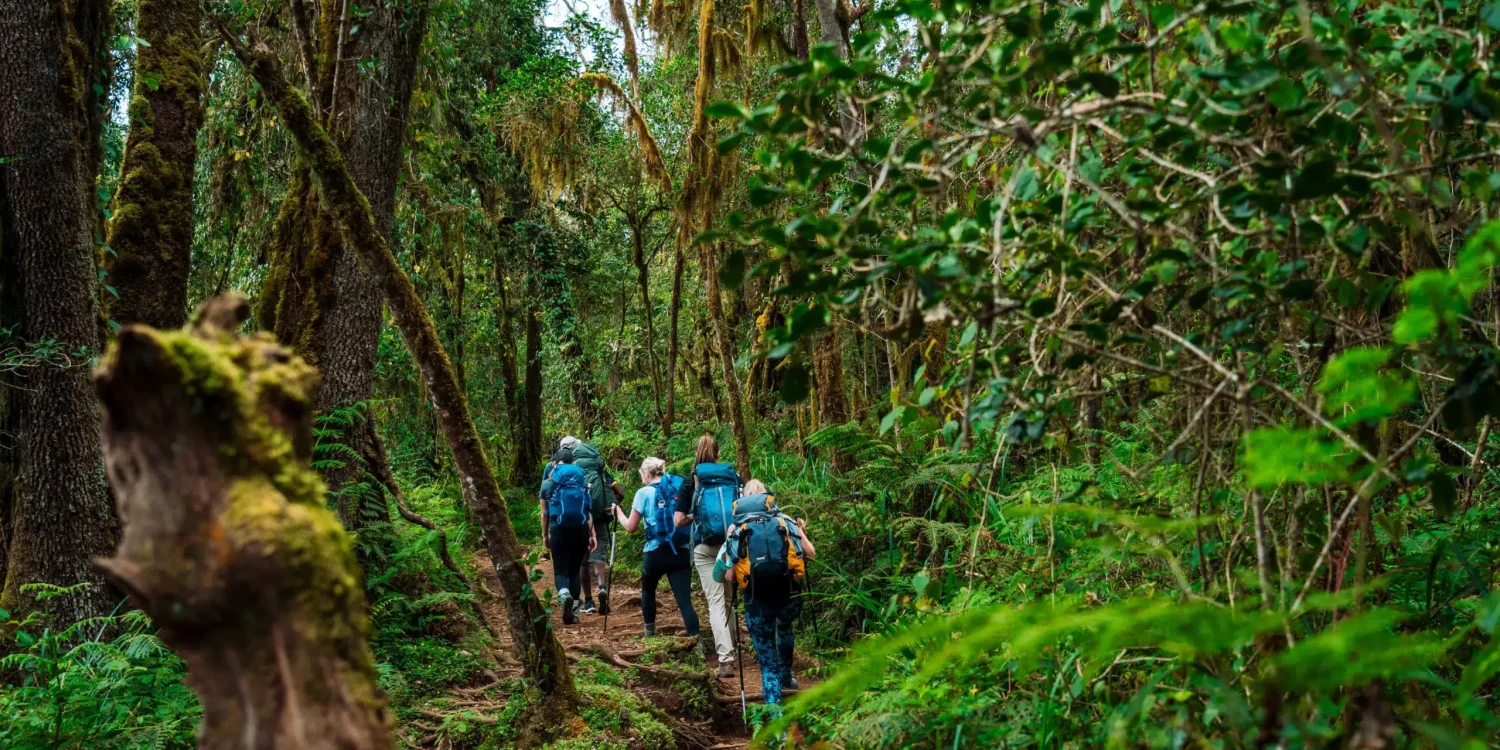
We began our ascent through a world of green. Moss-draped trees, ferns, begonias, and wild impatiens carpeting the forest floor. Spirits were high, conversations easy, laughter constant. By the time we reached Machame Camp at 2,835 meters, the rainforest had thinned, the air sharpened, and laughter carried through the tents. The mountain loomed above us, and we felt more ready than ever.
By the end of that first day, we weren’t strangers anymore. We were a team.
The Beating Heart of the Mountain
Before I go any further, it’s worth pausing to talk about the real heroes of Kilimanjaro – our mountain crew.
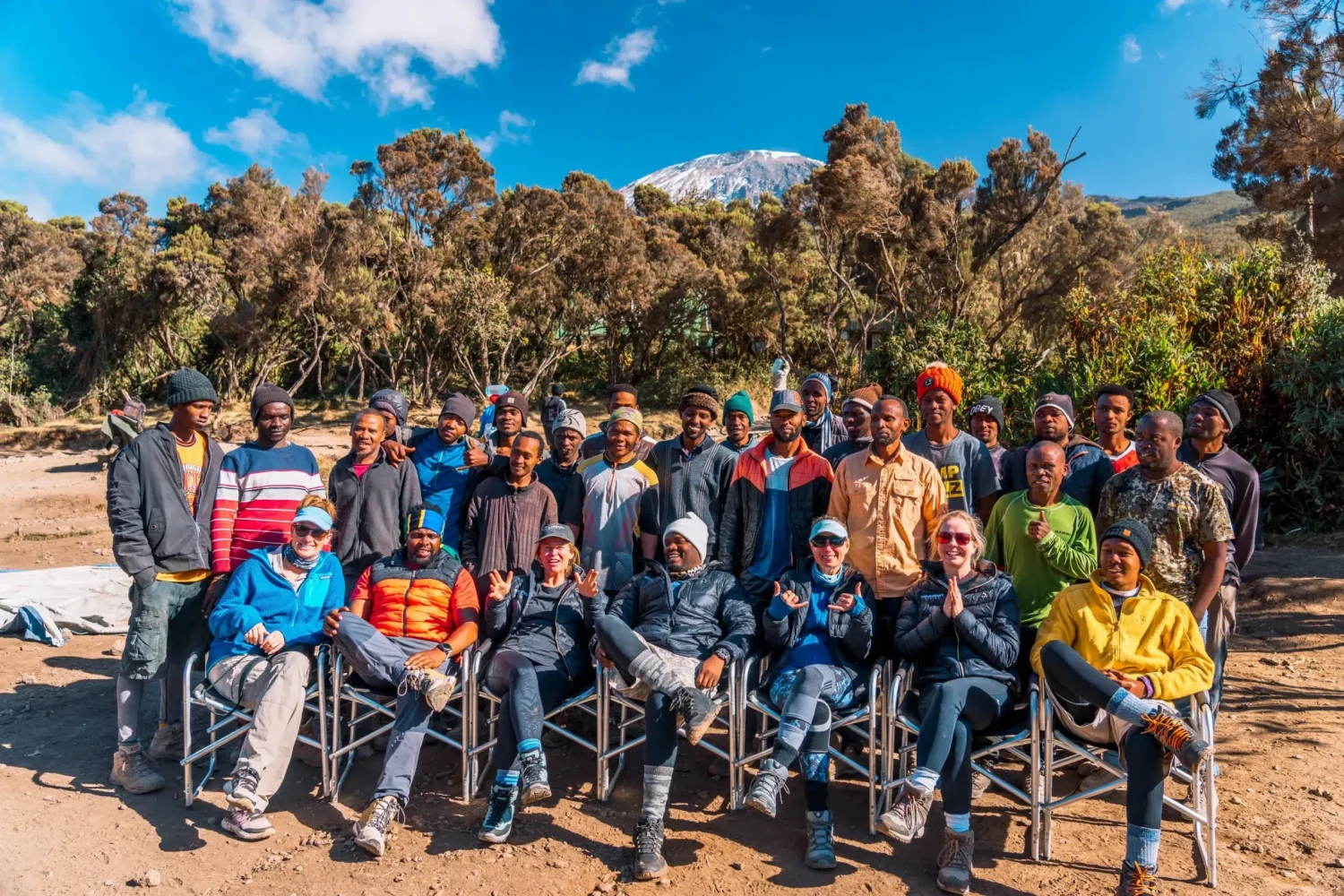
The porters, guides, and crew who carried the weight of the climb – literally and figuratively – are the spirit of this mountain. While we trekked with daypacks, they marched on ahead with everything that made camp life possible: tents, food, cooking gear, and our bags, all balanced with impossible grace. Every afternoon, we’d arrive at camp to find everything already set up – tents standing proudly against the elements, warm basins of hot water waiting for us, and smiles that could melt the fatigue from your bones.
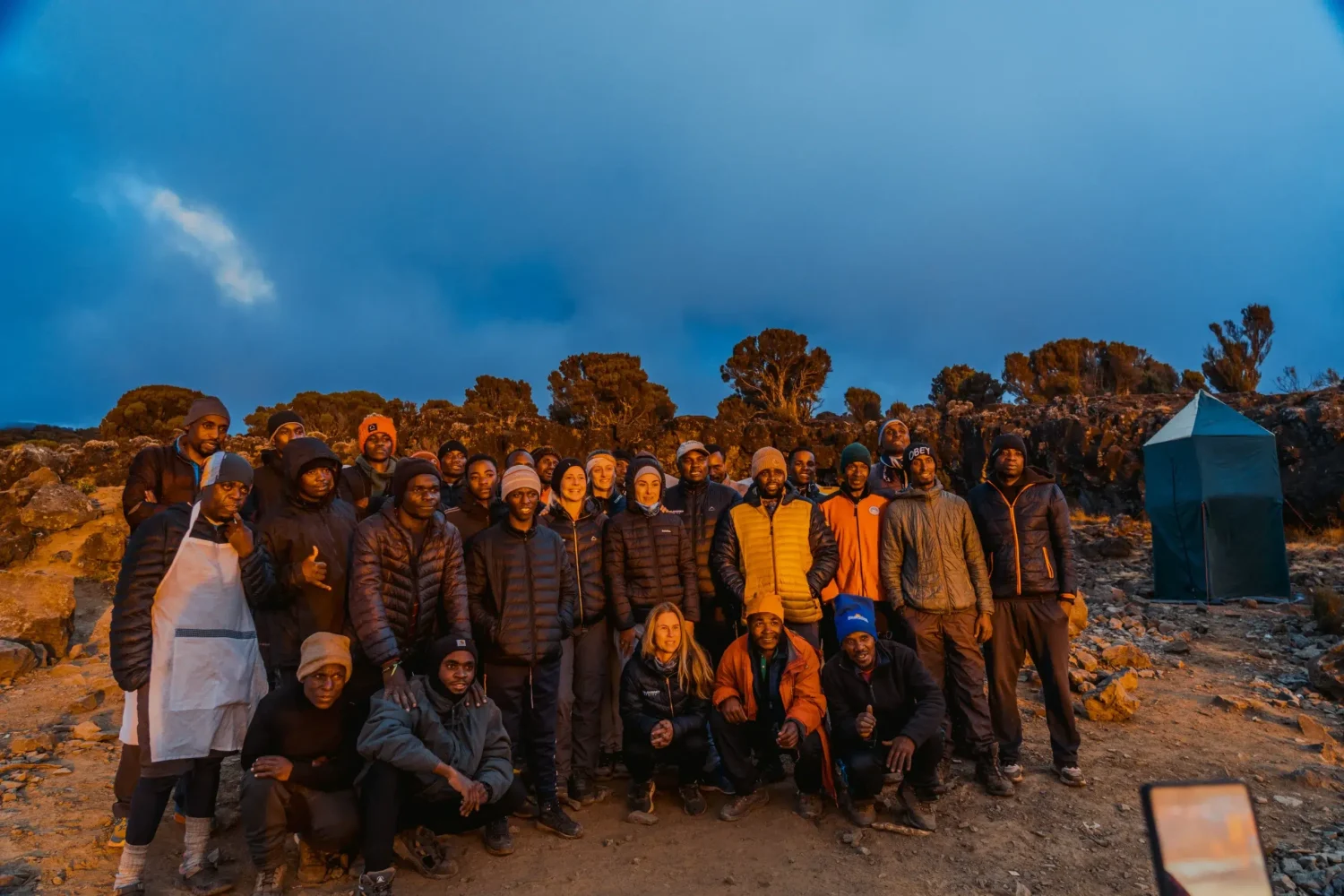
The porters, guides, and crew who carried the weight of the climb – literally and figuratively – are the spirit of this mountain.
There were songs. Always songs. Voices echoing through the thin air, laughter that travelled up the slopes, energy that made even the hardest days feel lighter. Every “pole pole” (slowly) was a reminder to breathe, to be present, to respect the rhythm of the climb.
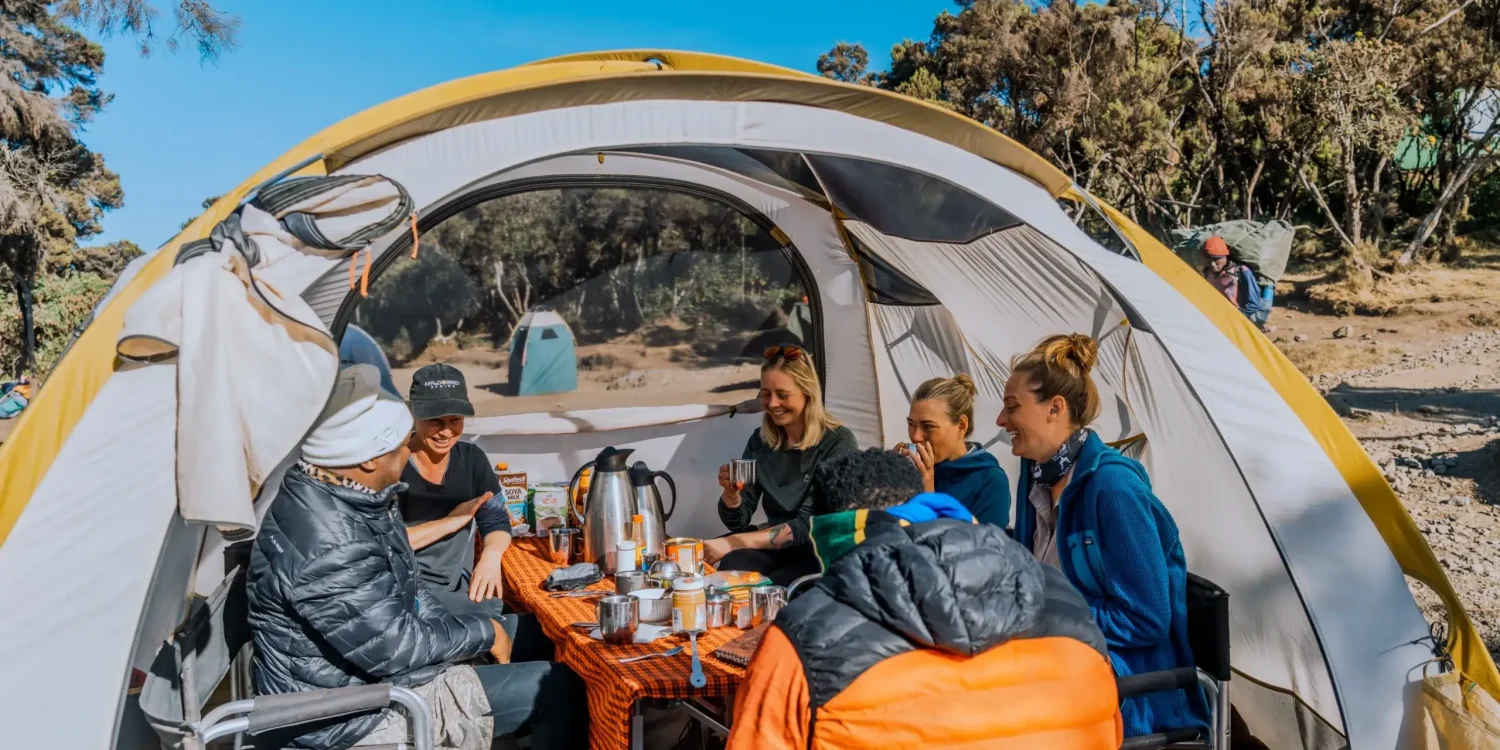
And the food – hot, hearty, and made with love, even at 4,000 meters. Every meal felt like comfort in its purest form.
Their kindness, their strength, and their unwavering positivity is unmatched. Without them, Kilimanjaro would be an impossible feat. They are the reason this mountain can be climbed, the quiet heartbeat behind every summit photo and every “we made it.” They are the spirit of Kilimanjaro.
Day 2: Machame to Shira
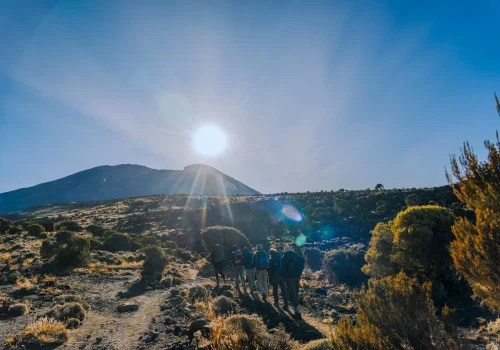
Day two came with a steep wake-up call. Literally. The trail from Machame to Shira was a steady, unforgiving climb over rocks and ridges that just kept going up. And then up some more. The rainforest fell away behind us, replaced by rough moorland. The air was thinner now, cooler, but the energy was still good. The banter kept rolling, even when our legs started to feel it.
The rainforest fell away behind us, replaced by rough moorland.
Somewhere along the way, we had our first real lesson in mountain practicality — a Shewee experiment that went horribly wrong and was never spoken of again (and definitely never repeated). From that point on, we all stuck to the tried-and-tested method of find a rock, face away, and move on. South Africans know better.
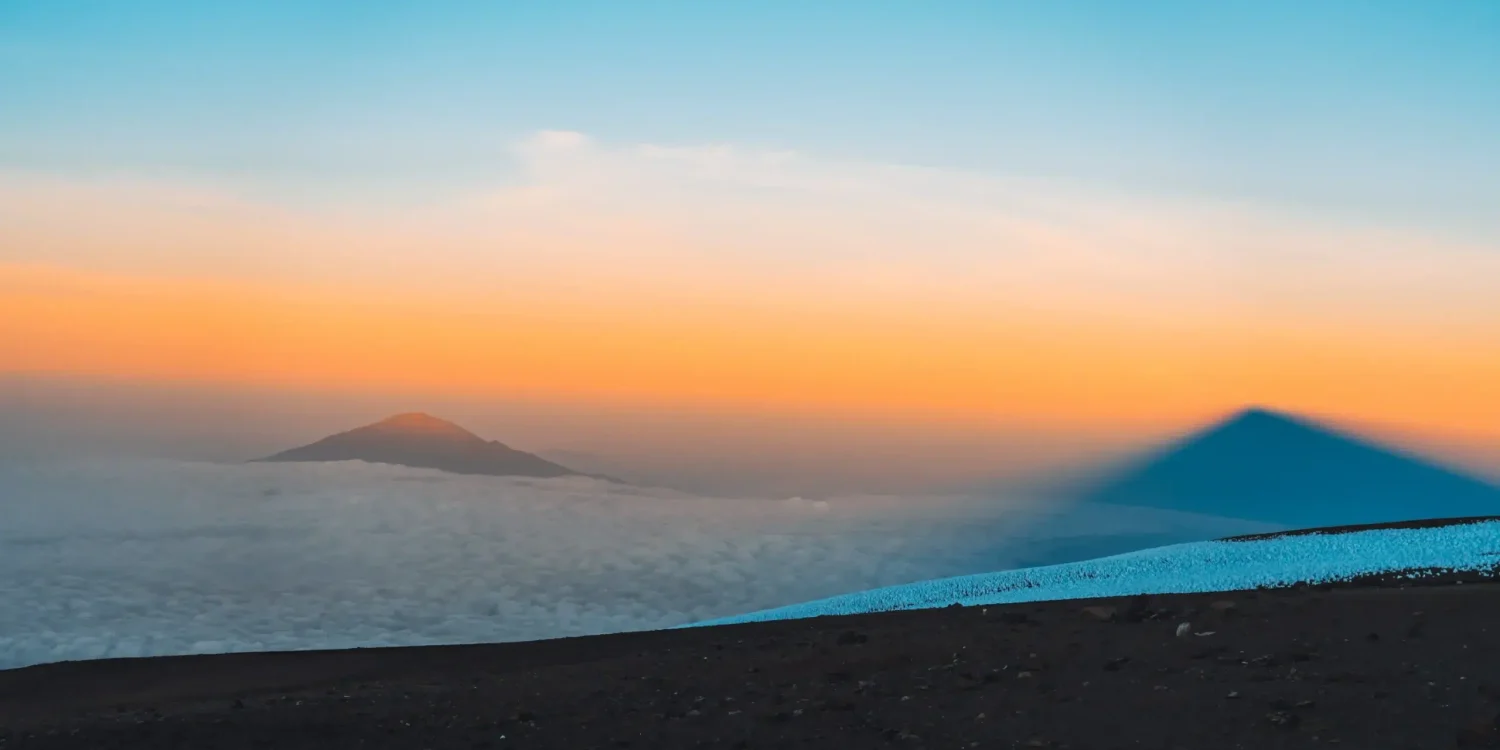
By late afternoon, we reached Shira Camp at 3,840 meters. We were now officially above the clouds. The exhaustion disappeared the moment we looked around. The light hit differently up there; the horizon was a soft blur of golden hues and purple, and in the distance, Mount Meru finally revealed herself. It was, without question, one of the most extraordinary sunsets I’ve ever seen.
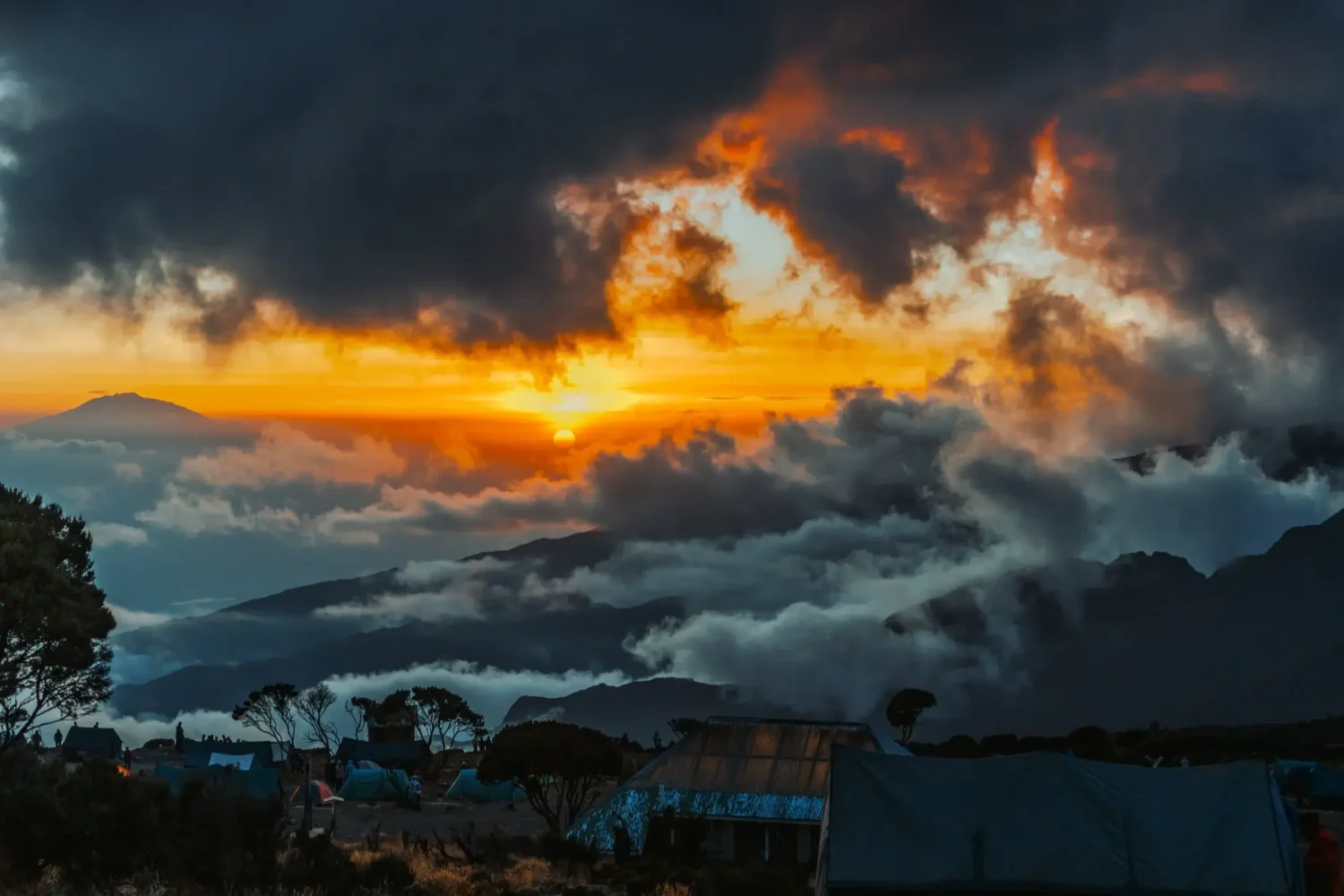
It was, without question, one of the most extraordinary sunsets I’ve ever seen.
That evening, Paulo, our head guide, gathered us around. Calm, wise, and full of quiet authority, he spoke about the mountain with a kind of respect that stuck with all of us. When he finished introducing the team by name, everyone broke into song – deep, joyful, effortless. It felt like the whole mountain was humming along.
Day 3: Shira to Lava Tower to Barranco
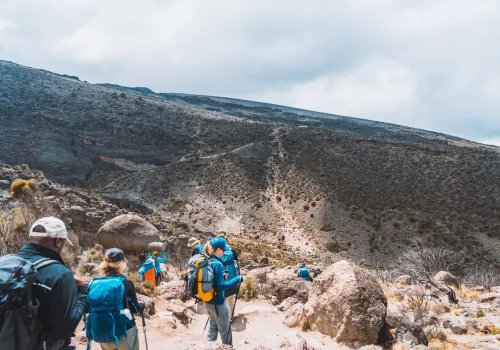
Day three was a grind. Steep, and stark. The greens of the lower slopes were gone, replaced by a landscape of grey dust and rock. It was the kind of day that stripped things back to the basics: step, breathe, repeat. The climb to Lava Tower was slow and relentless, the air thinning with every meter gained. This was the acclimatisation day – the one that mattered most for the days ahead.
We reached Lava Tower at lunchtime, standing at 4,600 meters. The air felt sharp and strange, and the world around us had become a volcanic expanse that seemed to stretch forever. Above us, the few daring climbers made their way up toward Arrow Glacier, where they’d camp in the crater. Beautiful, but brutal. A few years back, a rockfall up there had turned deadly. It was a reminder that the mountain, for all its beauty, demands respect.
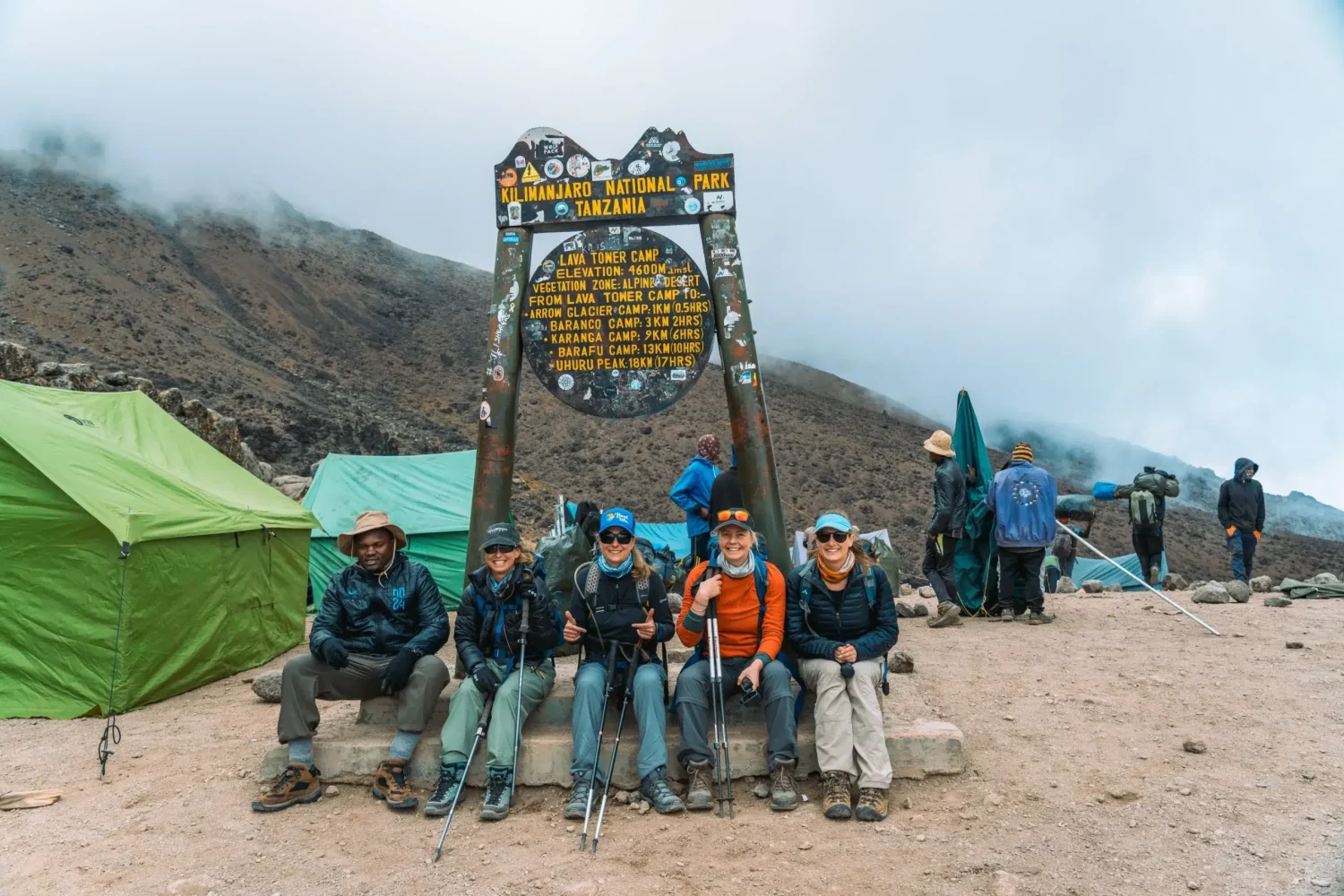
We reached Lava Tower at lunchtime, standing at 4,600 meters.
From there, we began the long descent into Barranco Valley, where the landscape transformed yet again. Suddenly, there was life. The prehistoric Dendrosenecio kilimanjari trees with their shaggy trunks, and the sculptural Lobelia deckenii, hiding flashes of purple deep within their leaves. It was like walking through another world.
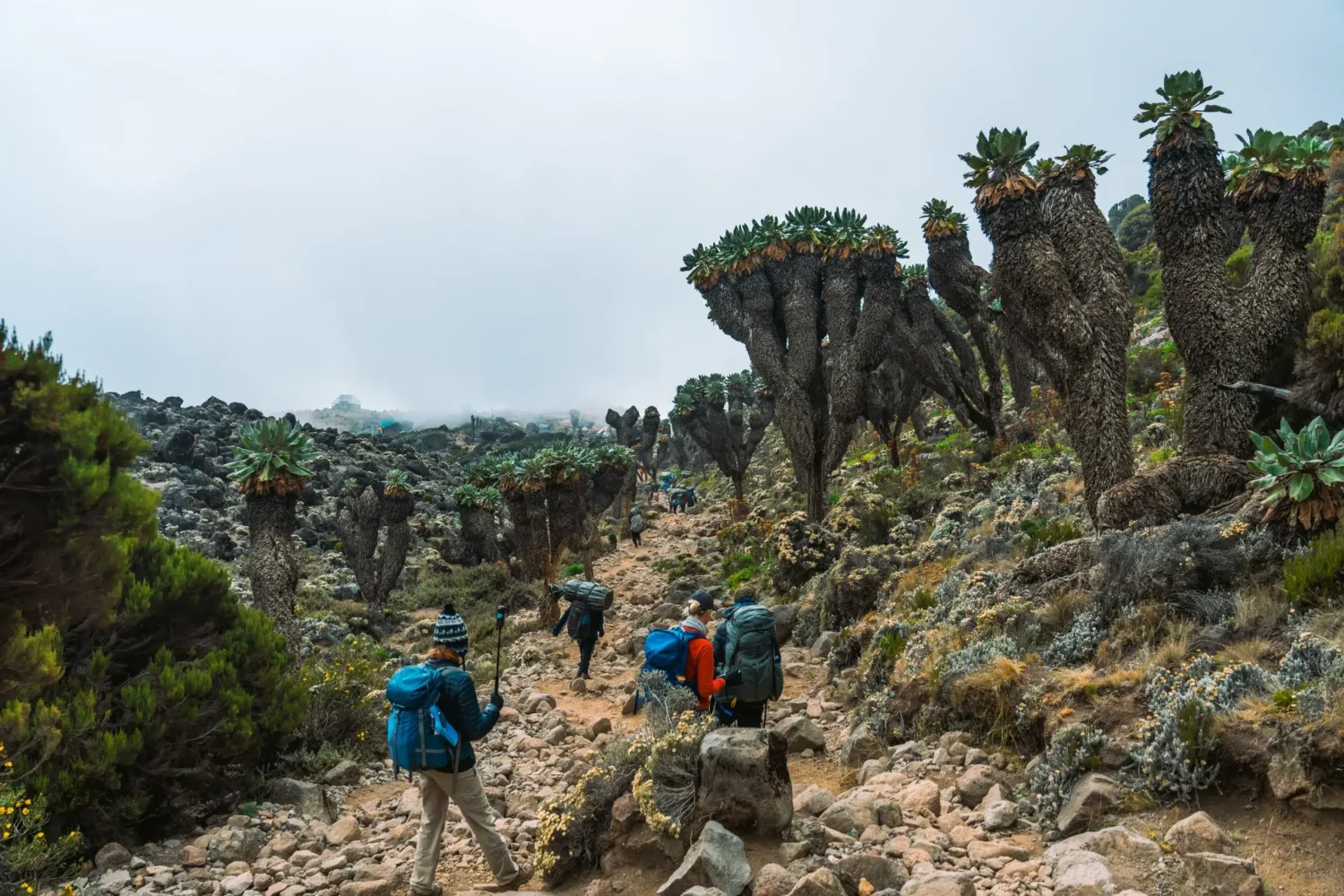
It was like walking through another world.
That afternoon, two of our teammates were hit hard by altitude sickness – nausea, pounding headaches, crushing fatigue. The rest of us rallied. We handed out Diamox, shared water, offered encouragement, and waited it out together. It wasn’t dramatic, but it was defining. Those few hours of worry and support turned our group into something solid. We weren’t just hiking the same route anymore. We were in it together. “Leave no man behind.”
That evening at Barranco Camp, the mountain opened up before us. The snow-capped summit of Kilimanjaro loomed in full view. It was magnificent. We stood together, tired but united. Our final destination in sight.
Day 4: The Barranco Wall
If Day 3 was about endurance, Day 4 was about having fun again. The Barranco Wall – our first real bit of scrambling – delivered just that. Trekking poles were swapped for hands as we picked our way up the steep rock face, step by step, under the watchful eye of the summit above. It looked close enough to touch, but still far enough to keep us humble.
The climb was steep, but the energy was high. There were laughs, the occasional curse, some heart palpitations, and plenty of encouragement from the guides. Every pause brought another ridiculous view of the world dropping away beneath us, Mount Meru floating in a haze behind.
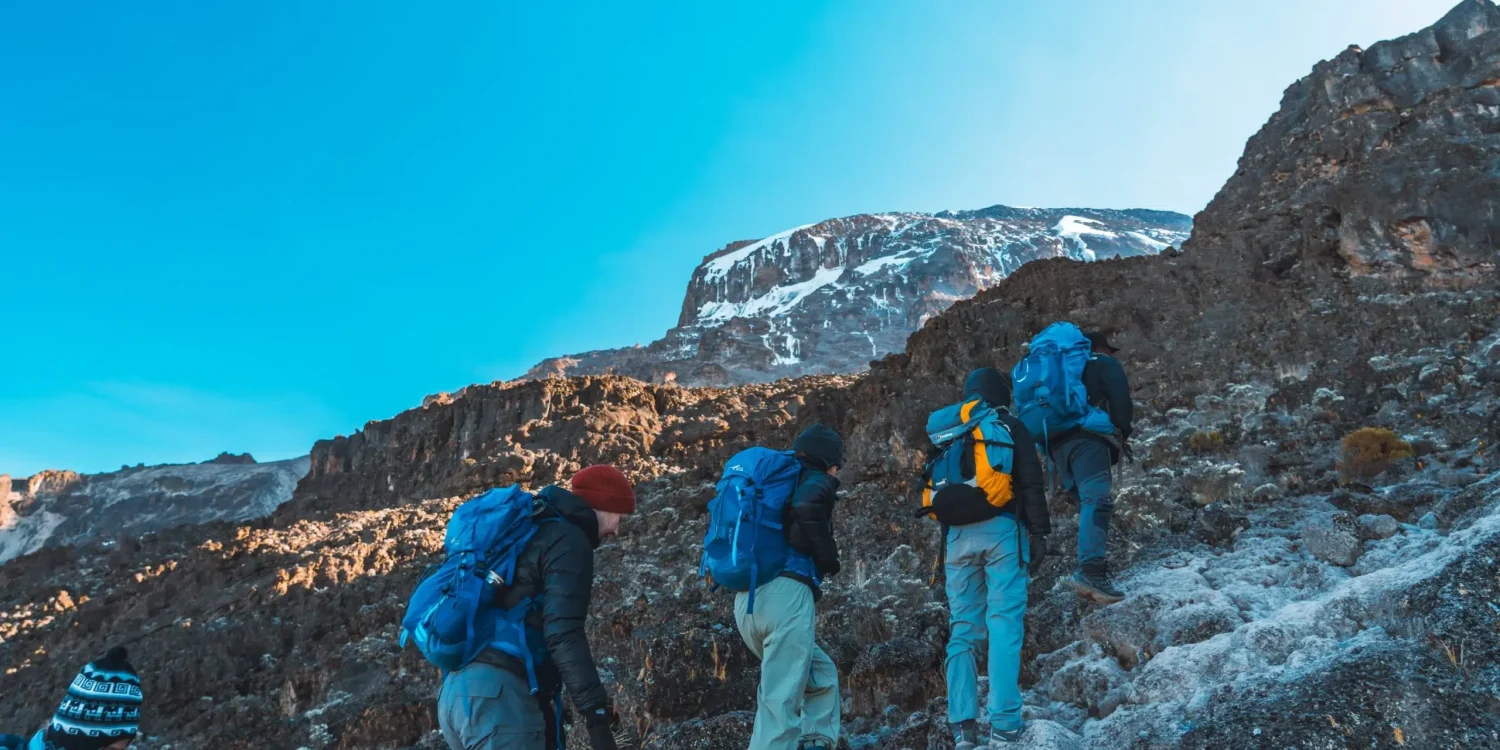
The climb was steep, but the energy was high.
From the top of the wall, the trail rolled through a series of valleys and ridges – up, down, up again. The kind of rhythm that tested your legs but lifted your mood. Kilimanjaro stayed in sight the whole way, a constant reminder of what waited ahead.
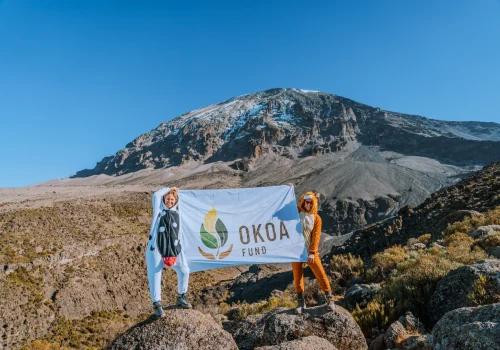
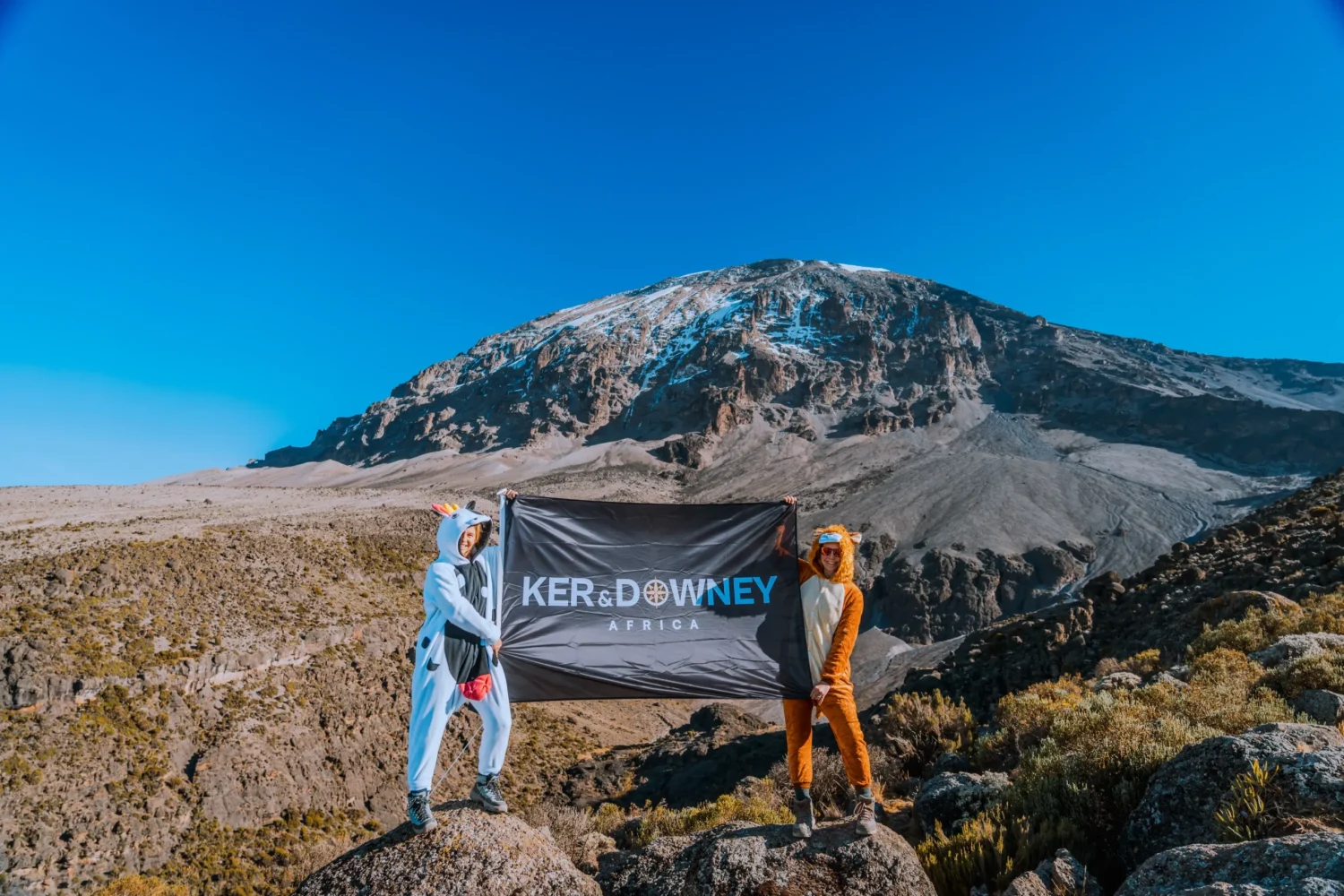
We reached Karanga Camp in the afternoon, greeted by wide-open views of Meru and the ice-capped peak that had followed us all day. This was the camp where Sarah and I finally pulled out our cow and lion onesies – a slightly ridiculous but perfectly fitting tribute to the Climb for Conservation cause. Dedication in its purest (and least practical) form.
Day 5: Karanga to Barafu — Base Camp
Day five felt different from the start. The jokes were quieter, the focus sharper. The climb from Karanga to Barafu was short but steep. Loose rock, thin air, and a clear sense that we were heading into the final stretch.
We reached base camp around midday. Barafu sits high and exposed, all dust and wind and silence. The air was razor-thin. Even small movements demanded effort. We dropped our bags and then set off on a short acclimatisation hike — a test run for what was coming. Every breath felt like a preview of the night ahead.
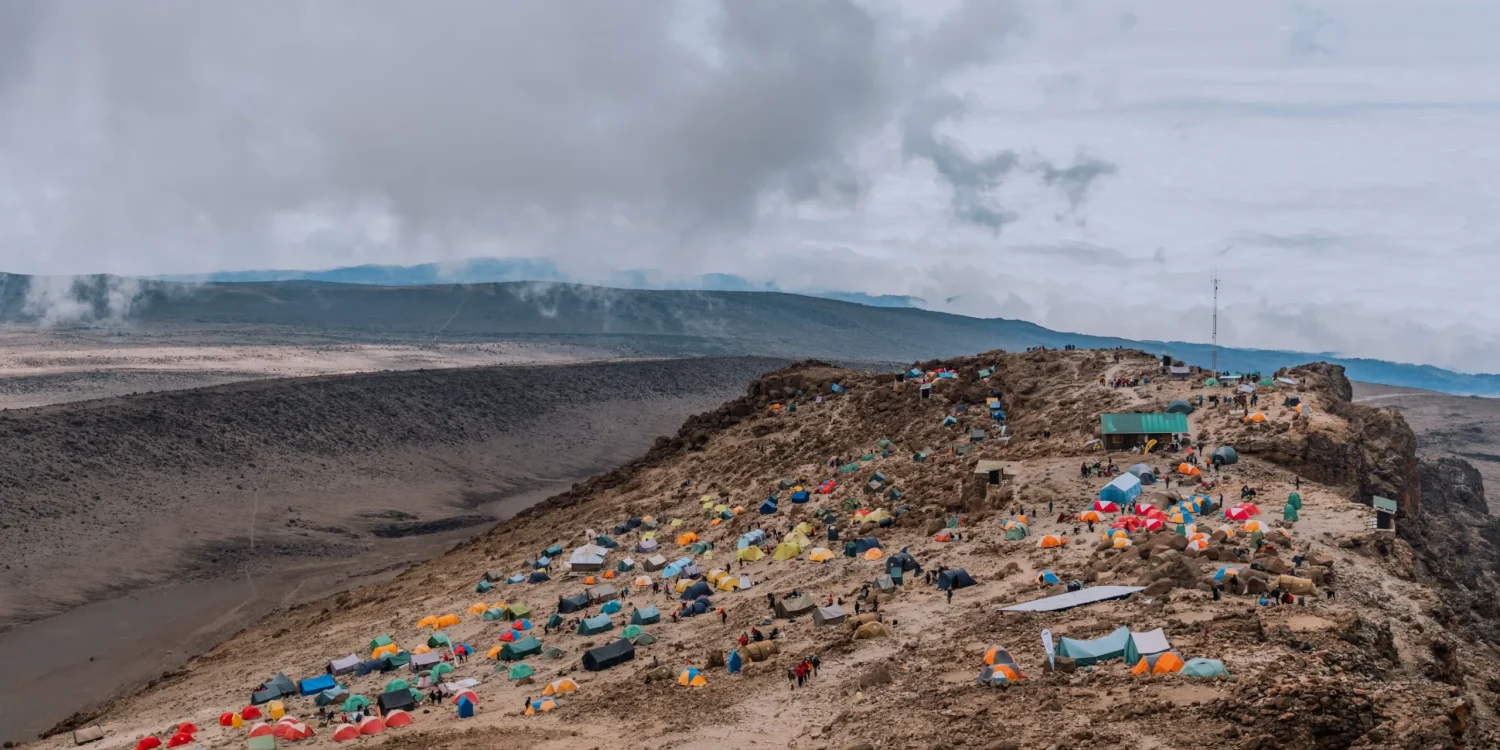
Barafu sits high and exposed, all dust and wind and silence.
Back in camp, the mood shifted, and the summit gear finally came out. Thick pants, down jackets, snow gloves, headlamps. Layers upon layers. We huddled in the mess tent for a final dinner of carbo-loaded pasta and a serious summit briefing from Paulo. Oxygen would come with us, but only he and his team would decide if and when it was needed. A smaller crew of guides would lead the way; the porters would stay behind at camp, waiting for our return.
The wind picked up as darkness fell. I remember the sound of it against the tent. Constant, restless. We lay down early, trying to trick our bodies into rest. At 11 p.m., they’d wake us. Then it would begin… the final push to the Roof of Africa.
Day 6: Summit Night
I didn’t sleep. Just lay there with my eyes closed, a thousand thoughts running wild. No idea what to expect, only that it would be hard.
At 11 pm, we were summoned. It was time. Layer upon layer. Thermal, fleece, down. Thick gloves, head torches. We forced down bowls of porridge and mugs of ginger tea – our ritual since day one, fresh ginger in boiling water to calm the altitude and the nerves.
Outside, the wind cut through everything. The air was brittle. We lined up single file, head torches forming a thin ribbon of light through the dark. No talking, just breath. And then we began.
For seven hours, we climbed in silence. -14°C. Thin air. A small circle of light in front of each of us. Every step burned. Breaks were short. Water, fruit juice, ginger tea. The guides sang to keep us moving – low, steady, rhythmic. It helped.
At one point, I looked up and saw what I thought was a strange constellation of stars above me. Perfectly spaced, glittering in the black sky. It was beautiful.. like Scorpio’s tail. Then it hit me: they were head torches. That’s how far we still had to go. I didn’t look up again.
Somewhere in that blur of steps and darkness, I thought I saw dawn breaking to my left. Through shallow breaths, I whispered it to Shannon. She grunted, squeezed my shoulder, and kept walking. Later, I found out the sun rose on the opposite side of the mountain – she just didn’t have the heart to tell me.
It was brutal. Relentless. One of the hardest things I’ve done. But when we finally reached Stella Point and saw the first streaks of light spill across the horizon, every tear, every ache, every breath was worth it. The night had finally broken.
The night had finally broken.
Day 6 (cont.)… Stella Point to Uhuru Peak to Mweka Camp
From Stella Point, everything felt surreal. We were in the Arctic Zone now – scree, ice, and air so thin it barely felt real. The world was a blur of snow and shadow, the horizon glowing as dawn spilled over the glaciers. To our left, the immense crater bellowed; ahead, towering ice gleamed blue and silver in the early light.
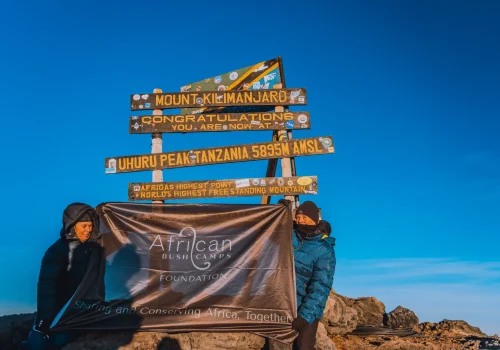
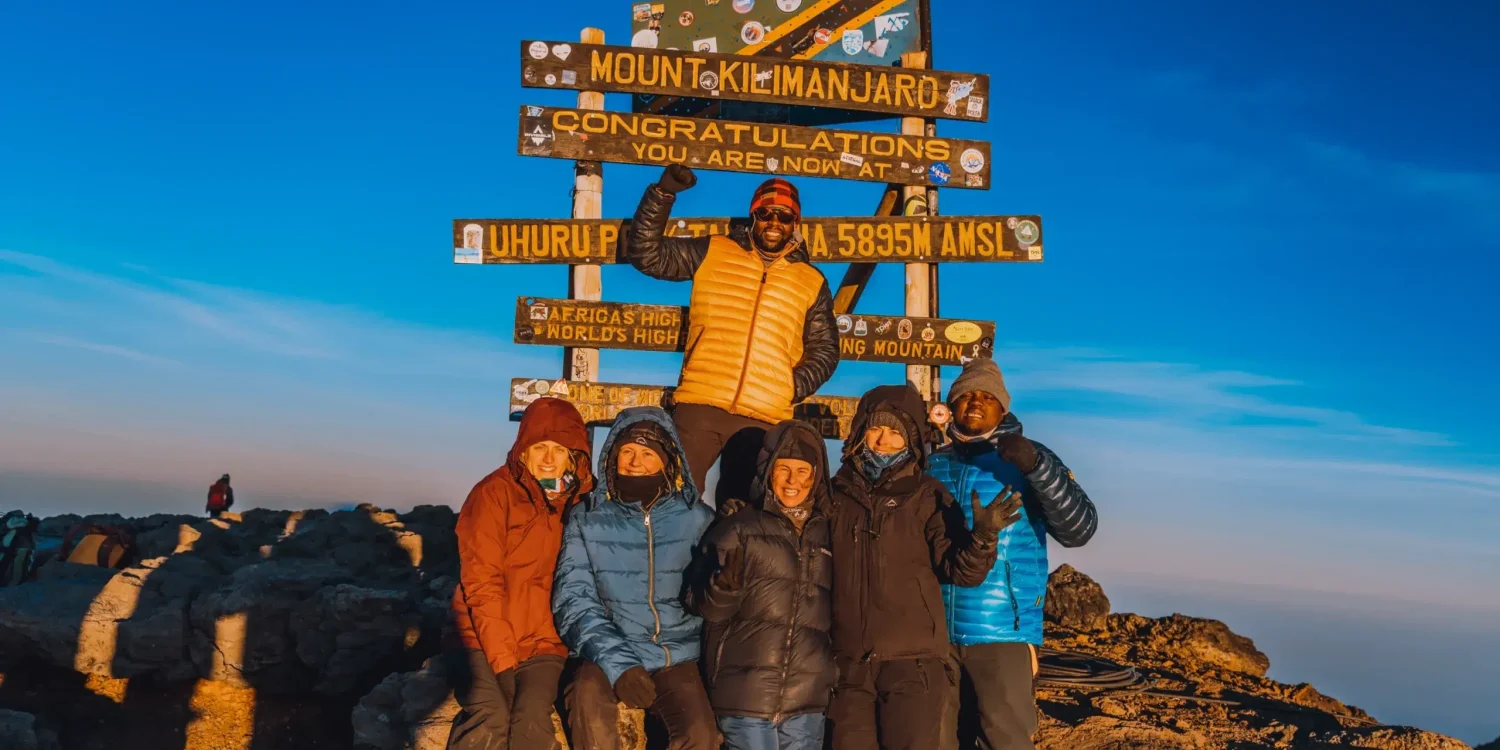
Uhuru Peak. 5,895 meters. The Roof of Africa.
What I’d seen from the plane days before was suddenly under my boots. It was a rush of photos, hugs, disbelief, and low-oxygen chaos. We didn’t stay long. The guides made that clear. Too much time up there and the altitude would wreak havoc on our fragile bodies.
Uhuru Peak. 5,895 meters. The Roof of Africa.
The descent was wild. My dedicated guide, Julius (affectionately known as “Julie” around camp, fittingly) took me by the arm, and we half-ran, half-skied down through loose scree and dust. Adrenaline met exhaustion. Only in daylight did I realize how steep and endless our route really was. Now it made sense why base camp sits tucked behind a ridge… so you can’t see what’s coming before you climb it. Smart. Psychological warfare, mountain-style.
The sound of helicopters was constant. Not everyone makes it. But our team did. Even Iggy, who battled altitude sickness on the way up and still had the presence of mind to reach for his camera and start shooting. “Leave no man behind.”
Back at base camp, there was no rest. A quick change, a splash of water, and another 12 kilometers downhill to Mweka Camp. Relentless. The dust clung to everything. It was Afrikaburn without the techno, or the mood-enhancing substances.
We stumbled into camp hours later. Filthy, wrecked. We had a camp shower; it felt like a spa. Then food. Then silence. Everyone crawled into their tents and passed out cold.
Day 7: Mweka Camp to Mweka Gate
We woke to birdsong and damp air. Muscles ached, but the mood was light. Rested. Relieved.
The descent from Mweka Camp was a celebration in motion. We moved fast, almost skipping down the trail, surrounded by green and the rush of oxygen we’d been craving for days. Every breath felt like a reward. The laughter came easily again. Paulo had called us “champions” from day one, and for the first time, we actually felt like champions!
At Mweka Gate, we were handed ice cold Kilimanjaro beers, and honestly, nothing has ever tasted better.
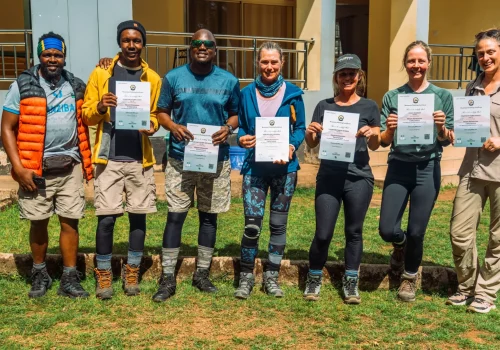
We sang one final time with our crew – not the jubilant start-of-the-climb kind of song, but something slower, heavier, full of gratitude. Then came the mountaineering certificates, a few tears, and quiet pride. We’d done it. The summit, the cause, the challenge. We’d raised the funds we set out to raise for Climb for Conservation.
And just like that, it was over.
Reflection
Kilimanjaro isn’t just a test of strength. It tests your patience, humility, ego, and your willingness to keep moving when your body and mind both say stop. It strips away the noise until there’s just you, your breath, and the rhythm of pole pole – slowly. The only way up. The only way through anything.
There’s a certain clarity that comes from shared suffering… the laughter, the headaches, the endless ginger tea, and the quiet understanding that no one else will ever really get it. Somewhere between the rainforests and the glaciers, strangers became friends. The real kind. The kind built through showing up when it matters.
The mountain teaches you that everything passes – exhaustion, fear, doubt, pain. Nothing lasts forever. Especially not the hardest moments.
We came to Climb for Conservation – to raise funds, awareness, and impact – but left with something harder to measure. Perspective. Gratitude. Proof that if you move pole pole, with people who have your back, you can go further than you ever thought possible.
And maybe that’s what it all comes down to, in life and on the mountain. Hakuna matata. No worries. Just keep walking.
Hakuna matata. No worries. Just keep walking.
The Climb for Conservation campaign was a success.
Together with the OKOA Fund and the African Bush Camps Foundation, we reached our goal of raising $7,000 to build seven lion bomas in Zimbabwe.
Each boma will help protect livestock, keep lions safe, and foster coexistence between people and wildlife.
A small victory on the mountain, and an even bigger one for conservation.